
How do you protect a focused hour when a useful conversation is happening two desks away? For professionals in Birmingham, avoiding distractions in coworking spaces starts with choosing how and where to work. Our advice on improving productivity through better working conditions is a useful starting point.
Shared workspaces bring people together, so some background activity is part of the setting. The aim is not to eliminate every sound or social exchange. Instead, identify what is interrupting you, then adjust your environment, boundaries or routine to suit the work in front of you.
What is breaking your attention first?
A passing conversation, a phone notification and a cluttered desk call for different responses. Before you change your routine, notice when you lose focus and what is happening around you. Is the interruption audible, visual, digital or social? Identifying the trigger makes it easier to choose a practical fix rather than treating every distraction alike.
In its 2026 global workplace survey, the Gensler Research Institute found that two-thirds of surveyed workers made do-it-yourself adjustments to address workplace design gaps. Noise remained one of the unresolved challenges. The findings cover workplaces broadly, not coworking spaces alone, but they underline why a small change to your surroundings can matter.
Keep a brief note of recurring interruptions for a few days. Record the time, the task you were doing and what diverted your attention. You might notice that casual conversation is manageable during routine tasks but disruptive when you are writing, calculating or reviewing confidential material.
Choose a workspace that suits the task
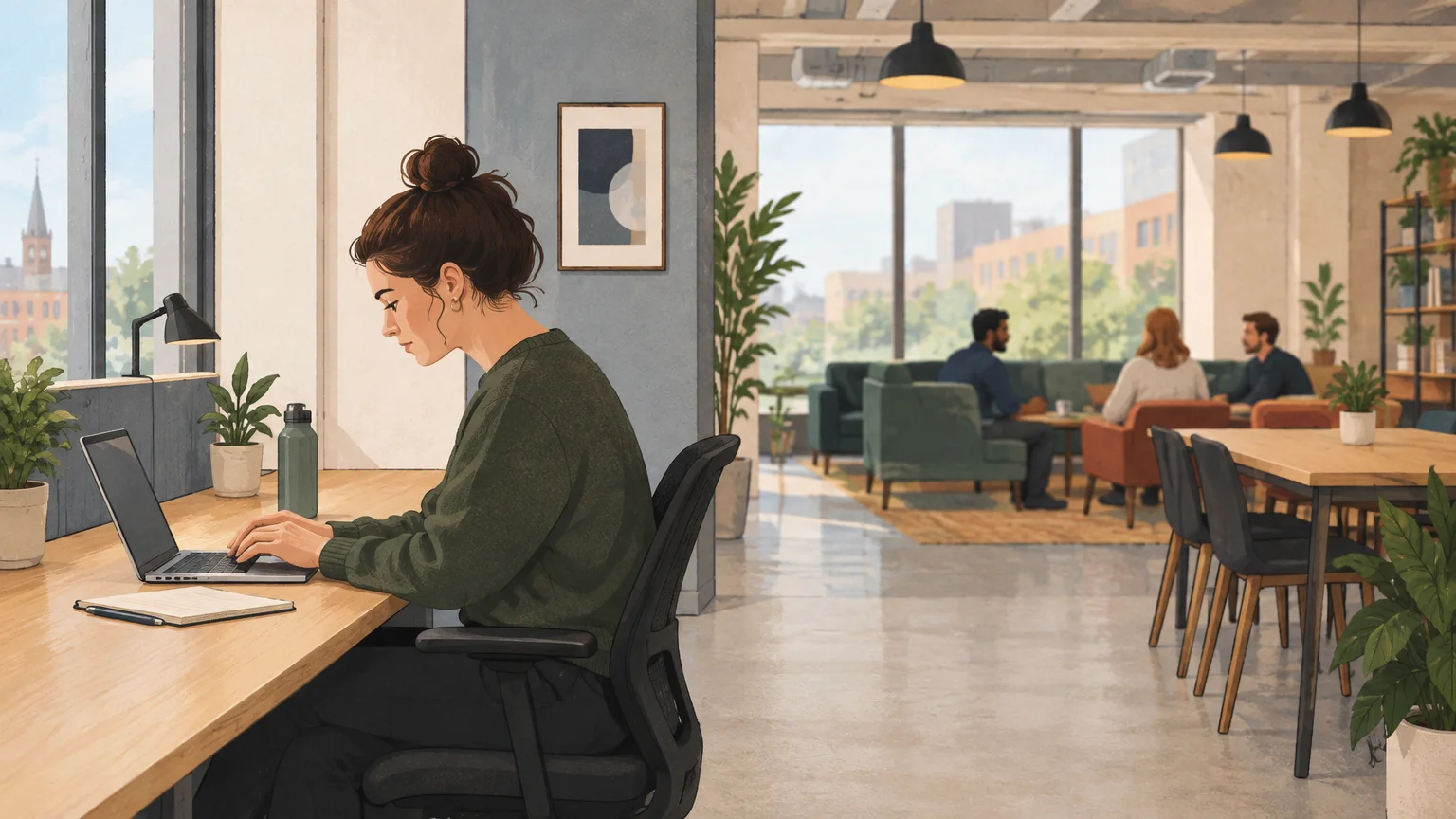
Writing a report, joining a call and discussing ideas with colleagues need different surroundings. If your usual desk faces a busy walkway, try a seat away from the main route. When you need fewer interruptions, look for a quieter area or a private setting, if one is available.
Think of workspace choice as part of your work plan. Reserve shared areas for tasks that tolerate some activity, then relocate when you need sustained attention or privacy. Our guide to different work areas in a coworking space explains how distinct settings can serve different needs.
A 2026 US survey by workplace design firm HED found that 47% of respondents wanted offices to reduce distractions, while 43% wanted help finding a suitable place to work. These results reflect that survey’s respondents, rather than coworking members specifically, but they highlight the value of matching the setting to the task.
Set considerate boundaries around conversation
When a chat interrupts focused work, use a calm, clear response. You could say, “I need to finish this section by midday. Would you be available to talk afterwards?” A specific time shows that you are postponing the conversation, not dismissing the person.
Agreeing on a simple signal can also reduce unnecessary interruptions. Headphones, for example, can indicate that you are concentrating, though they do not guarantee that others will notice or interpret the signal consistently. Use the signal when you need it, and remain approachable when your focused period ends.
A 2025 study of university coworking spaces identified noise and distraction as significant challenges in the academic settings it examined. The study does not represent every coworking environment, but it supports a practical principle: communicate focus needs respectfully instead of expecting others to guess.
Reduce digital and visual interruptions
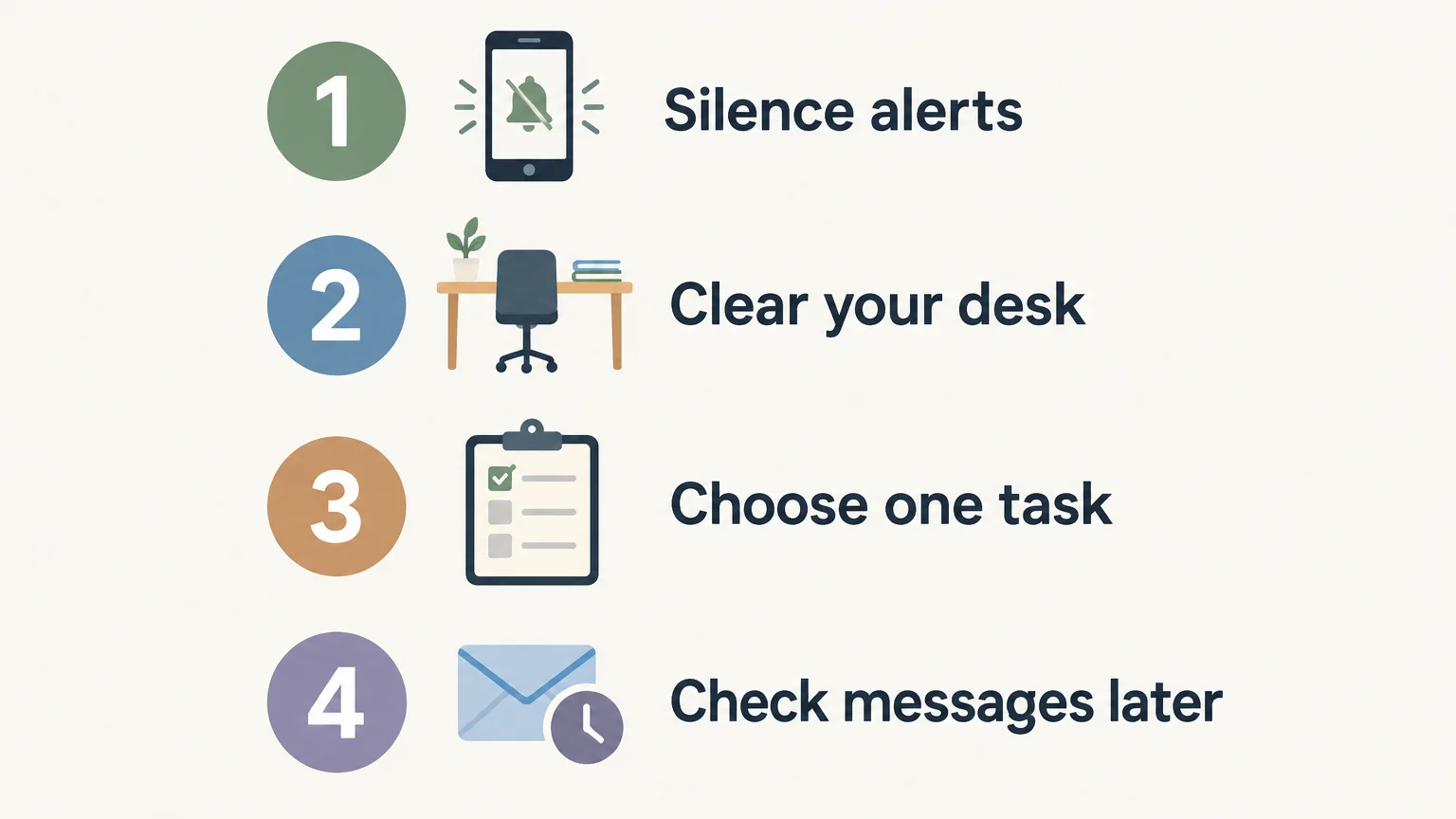
Put your phone out of reach during a focus block, and silence non-essential alerts. If your role allows it, check messages at planned times instead of responding to every notification as it arrives. This reduces the temptation to switch tasks whenever a screen lights up.
Clear only what is not needed for the task at hand. A tidy immediate work area makes it easier to find the materials you need and removes some competing visual cues. If movement in your peripheral vision draws your attention, face away from the busiest part of the space when possible.
Do not try to control every digital channel at once. Choose one change first, such as muting social notifications for an hour, then assess whether it improves your concentration. Keep essential work communications available if your responsibilities require a prompt response.
Plan focus blocks and deliberate breaks
Before opening your inbox, choose one important task and define what finishing a work block means. For example, aim to draft a section or review a specific set of figures. A clear target makes it easier to return to work after an interruption.
Set a reasonable period for concentrated work, then pause to stand, walk or get a drink. Use the break to reset rather than continuing to check messages. If your attention is fading, switch to a lighter task or take a longer pause instead of forcing another block.
Keep social and collaborative time in your schedule too. A short conversation over a break can preserve the community benefits of coworking without letting casual exchanges interrupt every focused task. The balance is easier to maintain when others know when you are available.
Review your routine and adjust when needed
If the same distraction keeps returning, change one part of your setup and observe the result. Try moving desks, storing unused items or agreeing on a signal with a regular neighbour. If the problem is a call or confidential conversation, choose a more private setting rather than raising your voice in a shared area.
For teams and individuals considering a different workspace format, our coworking office space options page describes shared and private settings. At BLOCK Birmingham, the available workspace formats include collaborative coworking areas, lounges and private offices. The Birmingham location is open 24 hours a day, which can give you flexibility over when you work.
Keep expectations realistic: a shared workspace is not silent, and wearing headphones does not remove the need for courtesy or clear communication. When a recurring issue affects your work, raise it calmly with the relevant person or space team and describe the specific change that would help.
Make focus part of your coworking routine
Reducing distractions in coworking spaces is easier when you identify the trigger, choose a setting suited to your task and protect focus time with considerate boundaries. Mute non-essential alerts, keep your work area orderly and schedule breaks before concentration fades. For professionals in Birmingham and elsewhere, small, consistent adjustments can help balance concentrated work with the benefits of a shared community.
Find a workspace that fits your working day
When your current setup makes it difficult to focus, consider whether a shared area, lounge or private office would better suit your tasks. The right workspace format gives you options for working independently and connecting with others.
At BLOCK Workspace, we provide collaborative coworking areas, lounges, private offices, flexible memberships and Day Passes across our Birmingham and Bristol portfolio. Explore our coworking workspace solutions to consider which format may suit your working routine.
Frequently Asked Questions
What are common distractions in a coworking space?
Common distractions include conversations, people moving nearby, phone calls, notifications and visual clutter. Notice which ones interrupt your work most often before choosing a response.
How can I signal that I need uninterrupted time?
Tell nearby coworkers when you are focusing and when you expect to be available again. Headphones can serve as a simple signal, but a friendly verbal explanation makes your preference clearer.
Should I use headphones to block out coworking noise?
Headphones can reduce some background sound and signal that you are concentrating. Keep the volume comfortable, and use a quieter or private setting when you need confidentiality or fewer interruptions.
How can I reduce phone and email distractions?
Silence non-essential notifications and place your phone out of reach during focused work. Where your role permits, check messages at planned intervals rather than reacting to each alert.
Can I work in BLOCK Birmingham outside standard office hours?
BLOCK Birmingham is open 24 hours a day. If you need a particular workspace format or facility, contact the team to check what is suitable for your requirements.