
For many remote professionals in Birmingham, the question is not whether working from home can work, but whether it still suits the task. The benefits of co-working over working from home are clearest when you need a sharper boundary, regular professional contact or a suitable place to meet. Explore the benefits of joining a workspace community when you are weighing up a shared workplace.
Home working can save travel time and give you greater control over your day. A co-working space offers another option: a professional setting you can use for focused work, interaction or meetings, without committing to a conventional office. The aim is not to choose one arrangement for every task, but to find the environment that supports your work.
What changes when you work outside home in Birmingham?
Start with the working day itself. At home, your work and personal life share the same setting. A co-working space gives you a separate place to arrive, concentrate and leave when your working day ends. That physical change can make routines easier to maintain, especially if your home doubles as your office.
Co-working also puts other professionals nearby. You can exchange ideas, ask a quick question or take a break around people who are working, rather than spending the whole day alone. Those everyday interactions are different from a scheduled video call, though they do not replace colleagues, managers or professional support.
A House of Lords report published in November 2025 cited ONS data collected from April to June 2025. It estimated that 39% of working adults in Great Britain worked from home at least some of the time, including 26% who worked hybrid and 13% who worked fully remotely. These figures describe working arrangements, not whether one setting suits every person.
Can a shared setting support focus and connection?

A change of setting can reduce the pull of household tasks and help you settle into a work routine. Other people working nearby can also provide a sense of shared purpose. This atmosphere is not a guarantee of better concentration: conversations and noise can distract, so consider whether the space has areas suited to the work you need to do.
The social side is useful when you work independently or want to build professional relationships. Informal conversations can lead to new perspectives, useful contacts or a welcome break in a solitary day. To explore how those connections develop, read about networking in a coworking space.
There is an important distinction between professional contact and collaboration. Shared space can make it easier to meet people and exchange ideas, but it does not guarantee meaningful connections or replace a team’s established ways of working. If you prefer quiet, look for a space where you can choose a calmer area or vary the days you attend.
What can a professional workspace add to your working routine?
A useful workspace should fit the work you actually do. You might need a shared desk for independent tasks, a lounge for a change of scene, a private office for a team, or a meeting room for a client conversation. The advantage is having formats to consider instead of relying on one room at home for every task.
At BLOCK Birmingham, our location is at One Colmore Square in the Colmore Row Business District and is open 24 hours a day. Our workspace portfolio includes private offices, coworking areas and lounges, with flexible memberships and Day Passes for ongoing or occasional access. If you are deciding between a dedicated room and a shared setting, our article on private offices versus coworking spaces explains the differences.
Facilities matter most when they solve a real work need. A suitable place to meet can help you keep client conversations out of your home, while shared amenities can make a workday more practical. BLOCK Bristol also has meeting rooms and a boardroom for meetings, away-days and training. Its meeting facilities are available to members and non-members, with multiple rooms for up to 6 people and a boardroom for up to 20.
How do the two options compare in practice?
Consider the parts of your workday that are hardest to manage at home. The comparison below can help you decide which setting better supports each need.
| Consideration | Working from home | Co-working |
|---|---|---|
| Focus | Lets you shape your surroundings, but household activity may interrupt. | Provides a work-focused setting, though shared areas can be busy. |
| Professional contact | Often relies on scheduled calls and messages. | Offers opportunities for informal interaction with other members. |
| Work-life boundaries | Needs routines or a dedicated home workspace to separate work from personal time. | Creates a physical change of setting between work and home. |
| Travel | Removes the trip to a workspace. | Requires travel, so location and frequency matter. |
| Facilities | Depends on what you have at home. | May provide shared areas and meeting facilities, depending on the location. |
| Cost | Avoids paying for workspace access. | Involves a fee, so consider how often you will use it and what you need. |
Home working also has advantages worth protecting. In February 2022, 78% of people in Great Britain who worked from home in some capacity said it improved their work-life balance, according to the ONS survey. This historical figure reflects respondents’ views at that time; it is a reminder that convenience and autonomy can be meaningful benefits of working at home.
How can you decide which setting suits you?
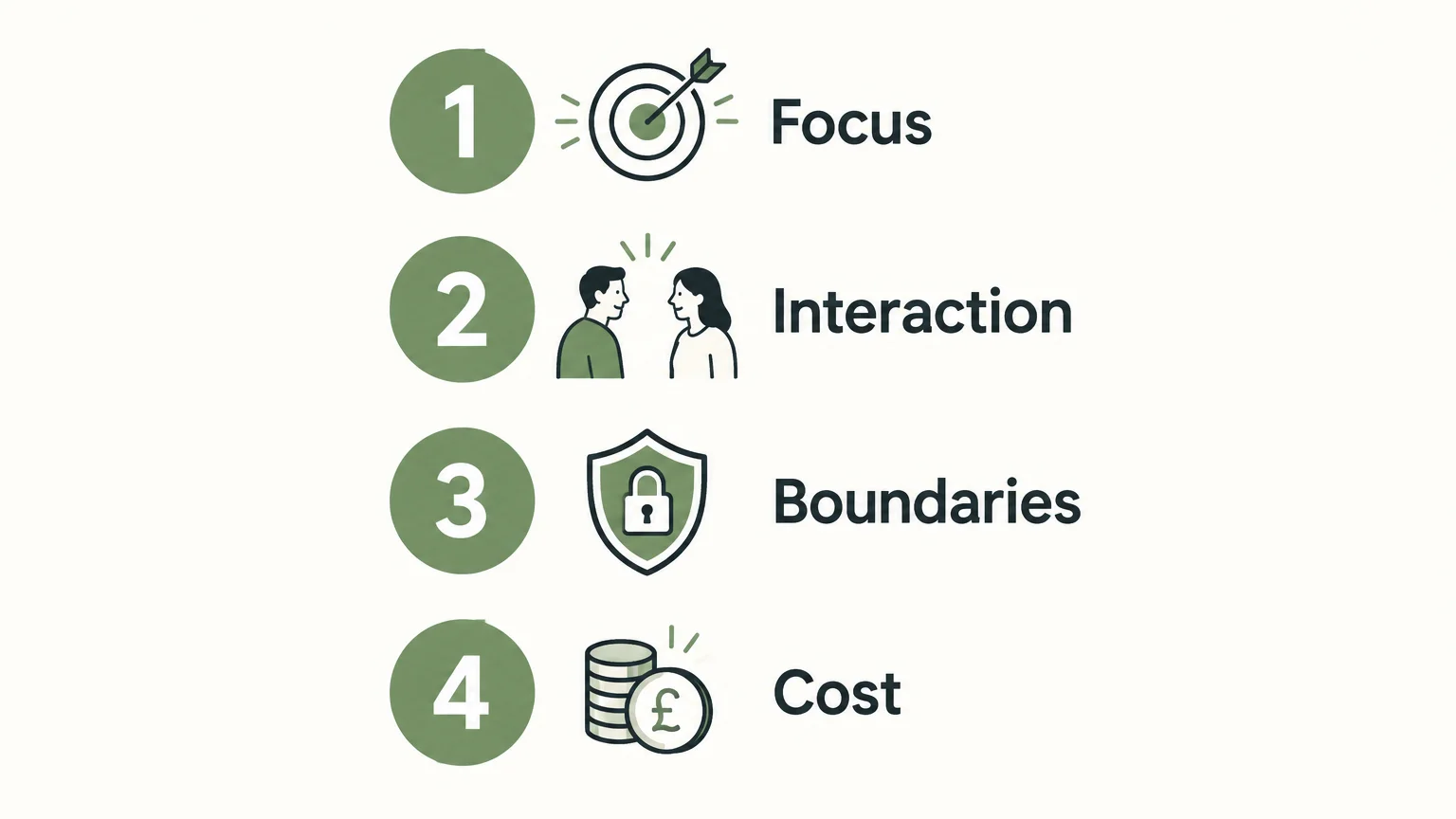
Think about your usual week rather than an idealised workday. Identify when you need uninterrupted focus, whether you miss professional interaction and how often you need a suitable place to meet. Then factor in the journey and what you would be willing to spend for the access you need.
- Identify the friction. Note whether distraction, isolation, blurred boundaries or meeting arrangements cause the most difficulty.
- Match space to task. Decide whether you need quiet, interaction, a private room or a meeting venue.
- Choose an access pattern. Consider occasional visits, regular shared workspace or a dedicated office.
- Review the value. Compare the access and facilities you will use with the fee and travel involved.
If you are exploring options for a team or business, our article on why businesses choose community workspaces offers another perspective on shared environments. BLOCK’s flexible memberships provide ongoing access, while Day Passes are available for occasional use. Check the details of the option and location that suit your needs before deciding.
Choose the setting that supports your work
The main advantages of co-working over working from home are a separate work setting, opportunities for professional contact and access to shared facilities. They matter most when these address a specific challenge in your routine. Working from home remains valuable for flexibility and avoiding travel, so you do not need to make the same choice for every day. If you are based in Birmingham, weigh the journey against the focus, connection or facilities you want from a workspace, then choose an arrangement that fits your working week.
Find a workspace that fits your working day
If working from home no longer gives you the setting or separation you need, a flexible workspace can give you another way to organise your week. Consider how often you need a desk, whether you work independently or with a team, and whether you need space for meetings.
At BLOCK Workspace, you can consider private offices, coworking areas, lounges, flexible memberships and Day Passes. Our Birmingham location is open 24 hours a day, and our workspace formats support different working needs. Explore our flexible workspace options to find an arrangement that suits your requirements.
Frequently Asked Questions
Is co-working better than working from home?
It depends on the work you do and what your home setup provides. Co-working suits people who value a separate workplace, professional interaction or access to shared facilities.
Can co-working help me focus?
A work-focused setting can make it easier to follow a routine and step away from household tasks. Shared spaces also have activity around you, so consider whether you need a quieter area for concentration.
Does co-working help with work-life boundaries?
Leaving a workspace at the end of the day creates a clearer physical distinction between work and home. A consistent routine can also help you switch off when working from home.
Can I use a coworking space occasionally?
Some workspaces offer access for occasional use as well as ongoing memberships. BLOCK offers Day Passes for people who need workspace for a day or as needed.
What should I consider before choosing a coworking space?
Consider your tasks, preferred level of interaction, journey, workspace format and the facilities you will use. Check the access and terms for the specific location before making a decision.