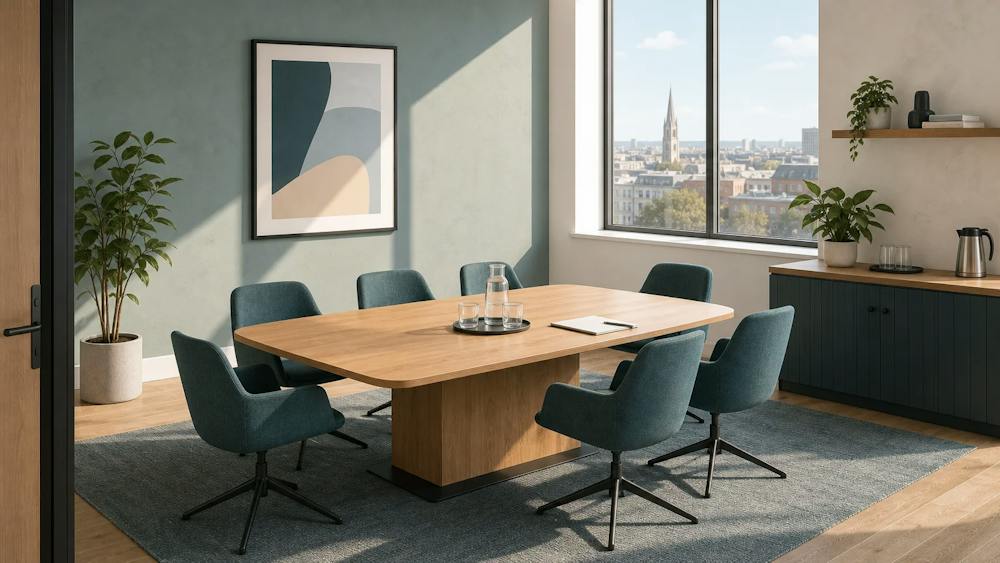
Would a room designed for 20 make a six-person discussion better, or leave everyone talking across empty space? When choosing the right meeting room, begin with the purpose of the session, not the décor. Our overview of how flexible workspaces compare with traditional offices can also help you decide whether you need a room for one event or a wider workspace arrangement.
For a meeting in Birmingham, consider who is attending, what they need to do and how they will get there. A client presentation, confidential interview and collaborative workshop have different requirements. Match the room to the real agenda, then confirm practical details such as seating, equipment, access and price with the venue.
How many people will attend, and what will they do?
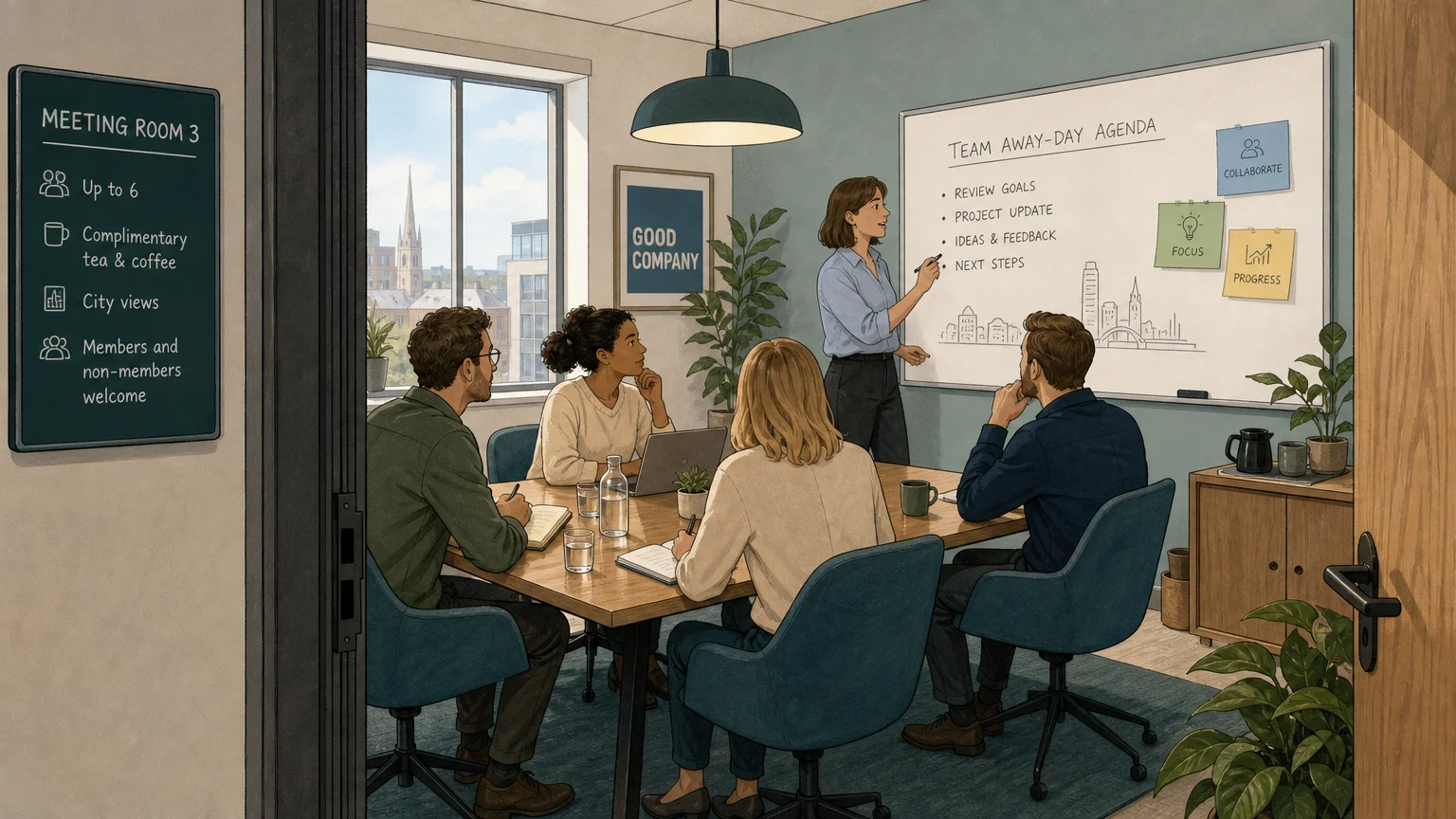
Start with the expected number of attendees, then allow enough space for people to move and participate comfortably. Capacity figures are a useful starting point, but your room also needs to fit the planned activity. A boardroom table may suit discussion, while a classroom arrangement gives participants somewhere to write during training.
Consider whether people will work in small groups, share materials or join remotely. These needs affect the layout as much as headcount does. A room with an appropriate seating layout can make it easier to see one another and contribute, while a poorly matched arrangement may disrupt the session.
Capacity patterns can help put room size in perspective. HubStar’s 2025–2026 index, based on workplace data from more than 300 million square feet across 13 countries, found that 80% of meetings in its dataset took place in rooms with capacity below six. Treat this as a benchmark from that dataset, not a rule for every organisation. HubStar’s occupancy index offers further context on how room use can inform space planning.
If you are unsure, ask the venue what each capacity means for your chosen setup. A room’s maximum occupancy may not reflect the number of people it can accommodate comfortably with tables, presentation equipment or breakout space.
Does the location work for everyone attending?
For a Birmingham meeting, check the journey from the perspective of all attendees. Consider public transport, walking distance, parking needs and whether visitors can find the entrance easily. A convenient central location may work well for clients travelling across the city, while a quieter setting could better suit a focused internal session.
Ask about step-free access and any other requirements your attendees may have. If people are joining from several locations, weigh travel time against the importance of meeting in person. Check directions and arrival arrangements before sending invitations, rather than assuming a postcode is enough.
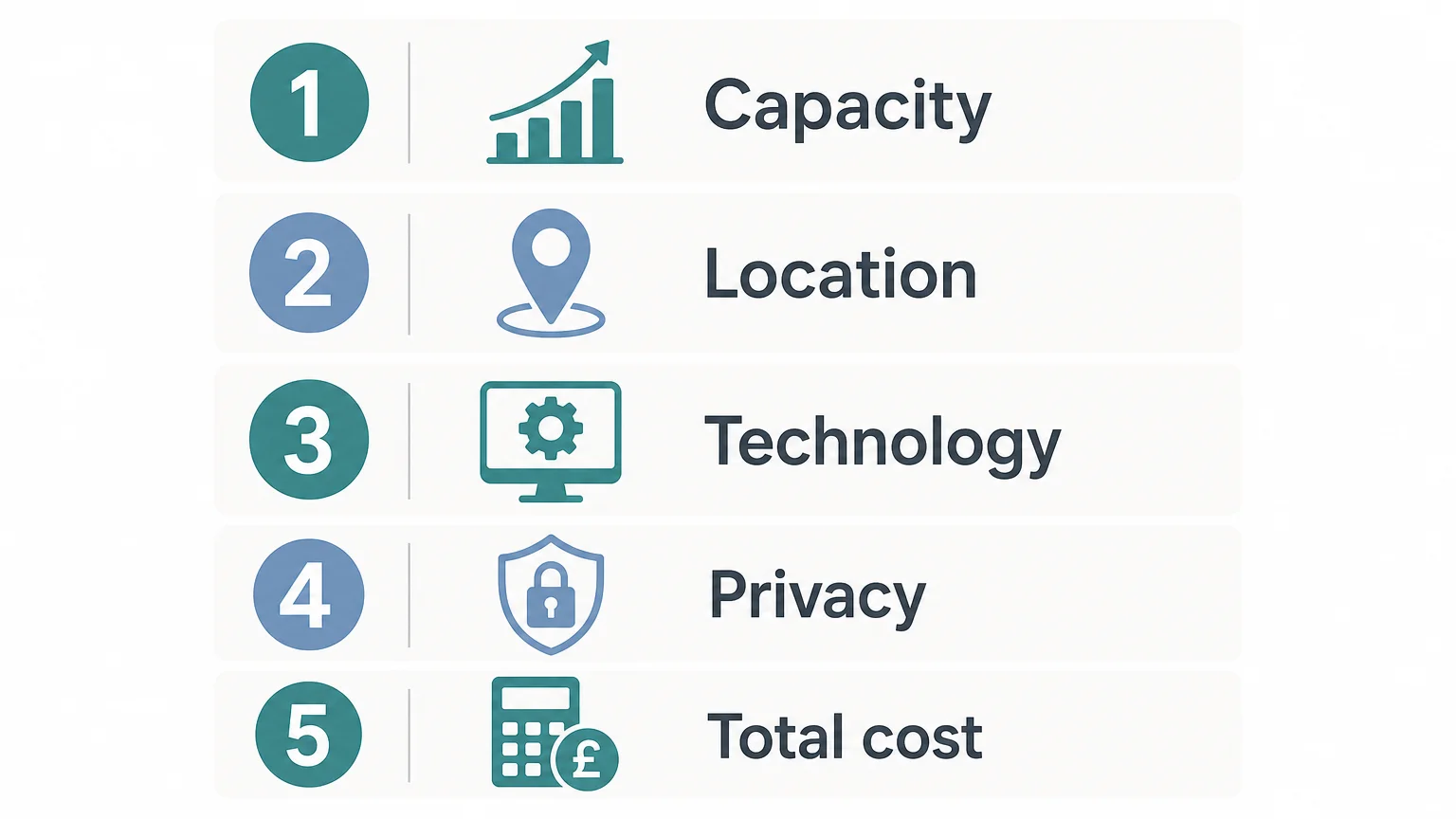
Use this short checklist when narrowing your choices:
- Capacity: Does the room suit the attendee number and activity?
- Location: Can attendees reach and enter it conveniently?
- Technology: Are the required equipment and connections available?
- Privacy: Is the setting suitable for the discussion?
- Total cost: Are all relevant charges clear before you confirm?
Will the room support presentations and hybrid meetings?
A room can look suitable but still fall short if its equipment does not match your agenda. For a presentation, confirm there is a screen or other suitable display, and ask how to connect your device. For a remote participant, check whether the room has the audio and video facilities you need, or whether you must bring equipment.
Think about sound as well as screens. People should be able to hear each other clearly, including participants joining online. If the session involves discussion around a large table, ask whether microphones cover all seats. If the meeting is mainly a presentation, confirm that everyone has a clear view of the presenter and display.
In Cvent’s 2026 sourcing report, meeting-room specifications, images and floor plans were among the information influencing planners’ venue decisions. The report drew on a global survey of more than 1,650 planners. Its findings underline why you should check details that affect your session, rather than choosing on room appearance alone. Cvent’s 2026 report provides further detail on planner priorities.
Ask the venue to confirm what is included, what requires advance notice and what you need to supply. If the meeting is important or technically complex, arrange to check the setup before the day.
What do privacy, comfort and availability require?
Think about the sensitivity and duration of your meeting. An interview or confidential client conversation may require a private, enclosed room. A longer workshop calls for comfortable seating, usable tables and enough space for breaks or group work. Where confidentiality matters, check whether conversations might be overheard from nearby areas.
Then check the booking details. Confirm the date, start and finish times, access arrangements and any setup time you need. Ask about cancellation terms, changes and what happens if your meeting overruns. Do not assume that a room being open outside standard office hours means the meeting room is bookable at any time.
Room usage research also cautions against choosing solely for rare peak demand. A 2026 study of 17 rooms in one office building recorded occupancy over two working weeks and modelled different room mixes. Its results apply to that specific building and study period, but show why observed demand can be more informative than assumptions. The 2026 room study summarises the research and its limits.
For your own booking, focus on the group and session in front of you. If attendance might change, ask whether the venue can offer a more suitable room or adjust the setup, and confirm any implications before agreeing.
How can you compare the full cost?
Compare the total cost for the time and setup you need, not just the headline room rate. Check whether the quoted amount includes equipment, refreshments, setup time or other requested services. Ask whether charges vary by booking length or room configuration.
Get the terms in writing before you confirm. Make sure you understand payment timing, cancellation conditions and any extra charges that could apply. If you are comparing ongoing workspace arrangements as well as a one-off room, our guide on how to tell if office pricing is transparent may help you identify which details to clarify.
Consider the value of what is included, not only the price. A room that already has the equipment you need may be more practical than a cheaper option requiring extra arrangements. But if you only need a simple space for a short discussion, avoid paying for facilities that do not support your purpose.
When should you consider a wider workspace?
If your team needs somewhere to work before or after the meeting, a room by itself may not meet the day’s needs. Consider whether a shared area, lounge or dedicated office would also be useful. Our explanation of private offices versus coworking spaces can help you compare those workspace formats.
Keep the location clear when assessing our facilities. BLOCK Bristol has meeting rooms for meetings, team away-days and training. Multiple rooms have capacities of up to six, while the boardroom caters for up to 20. The rooms are available to members and non-members, with complimentary tea and coffee and city views. These meeting facilities are in Bristol, not Birmingham.
For Birmingham, verify that the specific venue you are considering offers the meeting room, capacity and facilities you need. BLOCK Birmingham is a detailed workspace location, but our supplied meeting-room information applies to BLOCK Bristol. Check directly with any venue about its current room options and booking terms.
Make the room fit the meeting
Before confirming a room in Birmingham, match its capacity and layout to the session, check travel and access, and verify the equipment, privacy, availability and full cost. A clear brief makes it easier to compare realistic options and avoid paying for space or facilities your meeting does not need. The right meeting room is the one that lets attendees take part comfortably and accomplish the purpose of the session.
Find a Workspace That Fits Your Team
A meeting room may solve one session, while your team may also need somewhere to work before or after it. BLOCK Workspace provides private offices, collaborative coworking areas and lounges, flexible membership packages, and Day Passes. Our meeting facilities are in Bristol, so check the location against your event before making plans.
If you are weighing up a wider workspace arrangement, consider which format suits your team’s working pattern. Our options include dedicated offices and shared areas, alongside supporting facilities such as cafés or coffee service. Explore our workspace options for your team, and contact the relevant location to confirm availability and terms for the service you need.
Frequently Asked Questions
What should you check first when choosing a meeting room?
Start with the meeting purpose, attendee number and planned activities. Then check whether the room’s layout, location, equipment and privacy suit those requirements.
How much extra capacity should a meeting room have?
There is no single buffer that suits every meeting. Choose a room that fits the expected attendees and allows comfortable movement for the layout and activities planned.
What technology should you confirm before booking?
Check the display, device connections, internet access and any audio or video equipment needed for your agenda. For a hybrid meeting, confirm how remote participants will hear and see people in the room.
Can non-members book BLOCK meeting rooms?
BLOCK Bristol meeting rooms are available to members and non-members. Multiple rooms accommodate up to six people, and the boardroom caters for up to 20.
Does BLOCK have meeting rooms in Birmingham?
The meeting-room details in this article apply to BLOCK Bristol. BLOCK Birmingham is a detailed workspace location, but confirm directly with the relevant venue about the facilities available for your specific requirement.