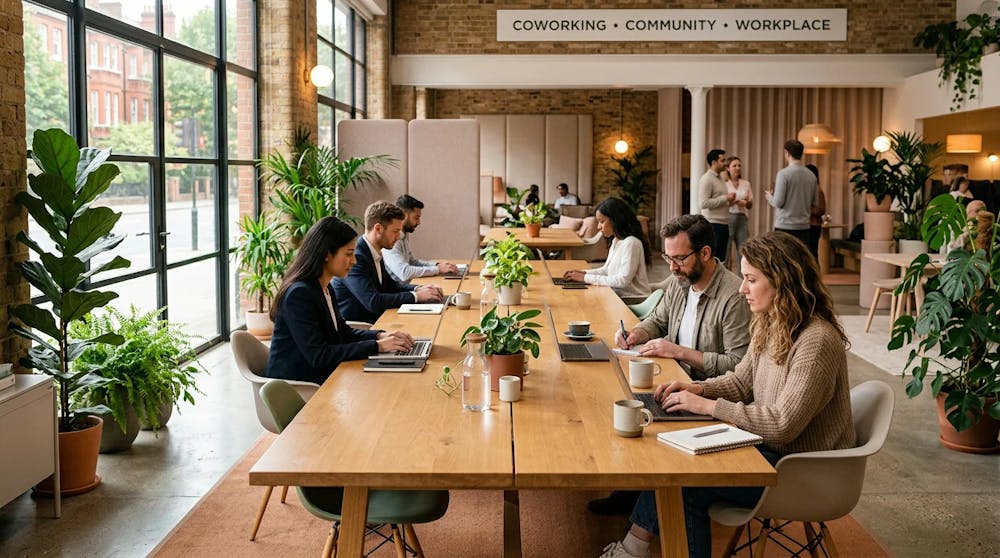
Nearly one in three working adults in Great Britain now splits time between home and an office, and that shift has reshaped how professionals find somewhere productive to work. When you need a proper desk for a single day, without a monthly commitment, our hot desks in Bristol and comparable flexible options answer a very specific need. You pay for the day you use, then you leave.
Flexible workspace has become a permanent fixture of British working life. Recent UK analysis reports that the coworking market grew by 8.4% across 2025, with 28% of working adults now working in a hybrid pattern. That combination is precisely what drives demand for the coworking day pass: a simple, low-commitment way to access a professional environment exactly when you need one.
What a coworking day pass actually includes
A coworking daily pass is a single-day ticket to a shared workspace. You book online or walk in, choose an available desk, work through the day, and leave with nothing to return. There is no direct debit, no notice period and no contract to read.
Most passes centre on hot desking, meaning you use an unassigned desk rather than a dedicated one. In practice, that gives you the full run of the shared floor for the day. A typical pass includes:
- A desk in the open-plan or breakout areas for the working day
- High-speed, reliable Wi-Fi suitable for video calls
- Access to kitchen facilities, tea and coffee
- Quiet zones and soundproofed phone booths for focused work or calls
- Meeting room hire, usually bookable separately at a member rate
The appeal is straightforward. You gain the same professional setting as full-time members without the ongoing cost. If you are weighing structured workspaces against informal alternatives, our guide to communal working spaces explains how shared environments support both focus and connection.

How much does a day pass cost in the UK?
Pricing varies more than most people expect, and the gap between the budget and premium ends of the market is wide. Regional hubs often start at around £10 per day, while prime central locations with barista coffee and wellness-focused interiors can reach £40 to £50.
Monthly membership benchmarks help put day rates in context. Industry data shows the median monthly coworking membership in the UK sits around £180, rising to roughly £210 in Greater London, with Oxford the most expensive market at about £244. Those figures reflect the same geographic premium you will encounter when buying a single day.
One point deserves attention. Some spaces advertise a low headline rate, then charge separately for printing, meeting rooms or even coffee. Before you book, confirm what is genuinely included so the price you see is the price you pay.
| Access type | Typical commitment | Best for |
|---|---|---|
| Day pass | Single day, no contract | Occasional or trial use |
| Multi-day bundle | Prepaid days, flexible use | Hybrid or travel weeks |
| Hot desk membership | Monthly, rolling | Regular weekly attendance |
| Our flexible memberships | Ultra-flexible, transparent pricing | Professionals and teams wanting value beyond a desk |
Day pass versus membership: which represents better value
The honest answer depends entirely on how often you plan to attend. A useful rule of thumb helps you decide without overthinking it.
- One to three days a month: a day pass is the obvious choice, since you pay only for what you use.
- Four to eight days a month: this is the crossover zone, where a prepaid bundle or a limited monthly plan starts to undercut individual passes.
- Nine or more days a month: a rolling membership almost always costs less and gives you the consistency of a regular base.
The advantage of starting with a single day is that there is no pressure. Use it once, and if you find yourself returning, upgrading is simple. If you are comparing formats more broadly, our overview of short-term office options sets out how passes, bundles and flexible memberships fit different working rhythms.
Who uses coworking day passes
Day passes attract a wider audience than many assume. The floor of a typical UK space on any given weekday tends to hold a genuine mix of people rather than freelancers alone.
- Freelancers and consultants who want a professional setting without a monthly commitment
- Hybrid employees seeking a change of scenery or a quiet place for video calls away from home distractions
- Business travellers needing a proper workspace between meetings rather than a hotel lobby
- Startup founders not yet ready for a private office but wanting somewhere more credible than a spare room
- People trialling a space before committing to any membership
This breadth reflects a structural change in the market. Market analysis values the UK coworking sector at around USD 2.08 billion in 2026, growing at a compound annual rate of 7.45%, driven largely by employers formalising hybrid policies. Flexible space has moved from a cyclical perk to a core part of how organisations think about property.
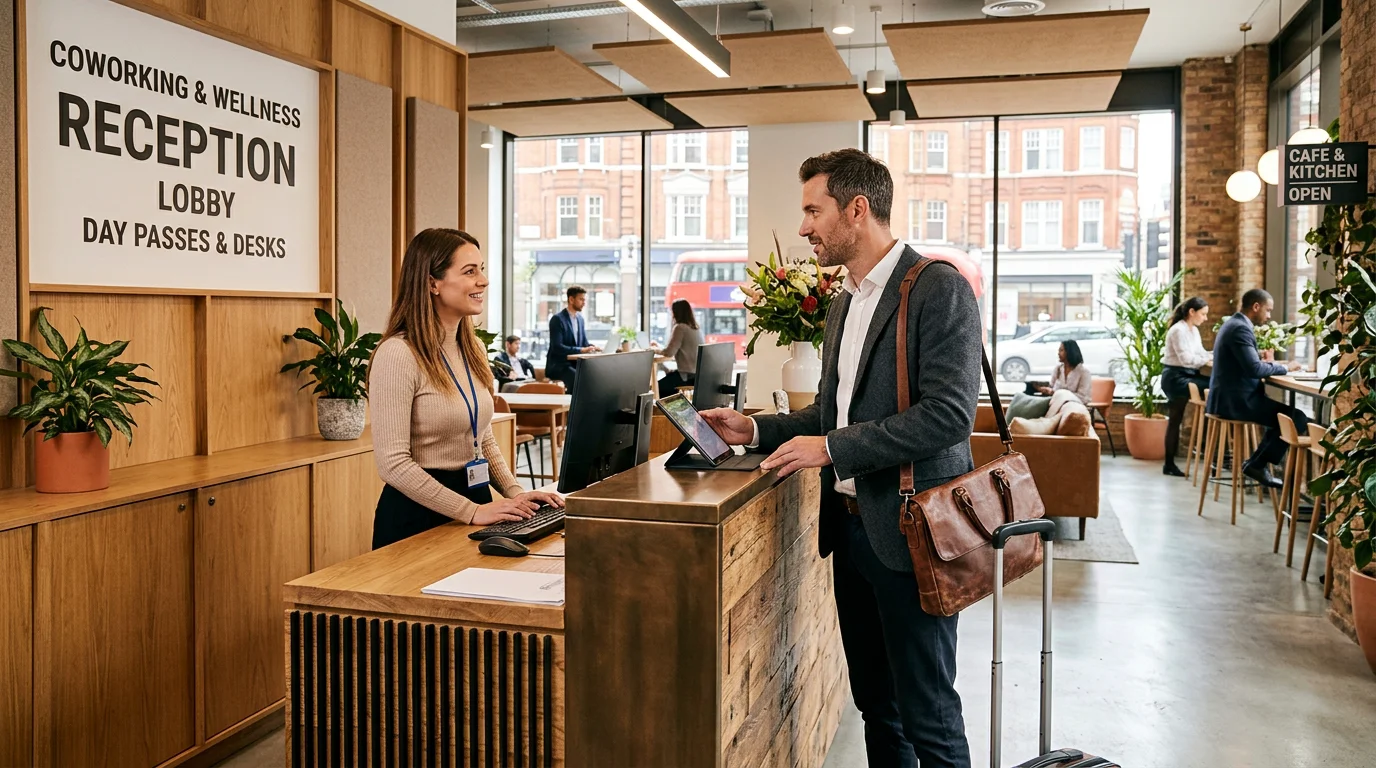
What to check before you book
Not every day pass delivers the same experience, so a short checklist protects your working day. A wobbly table and a slow connection will cost you far more than the price of the pass.
- Wi-Fi speed and reliability: ask about connection speed, since anything below 100Mbps will frustrate video calls.
- Desk and chair quality: look for ergonomic furniture and well-lit work areas, because you will sit there for hours.
- Quiet zones and phone booths: confirm these are included at no extra cost.
- Refreshments: clarify whether coffee is self-service or barista-made, and whether it is charged separately.
- Location and transport links: verify the actual walking distance to the nearest station rather than the marketing claim.
Supply is rarely the problem in Britain. Q1 2026 industry data records 4,270 coworking locations across the UK, with Greater London alone accounting for 1,209 and Manchester leading the regions at 123. That density means you can usually find a well-connected space near wherever your day takes you.
Day passes, private offices and the wider workspace ladder
A day pass sits at one end of a broader spectrum. As your needs grow, so do the formats available, from hot desking through dedicated desks to private, lockable offices with staffed reception and dedicated amenities.
Understanding where each format fits helps you avoid paying for more than you need, or committing too little. If you are unsure whether flexible coworking or a more managed environment suits you, our comparison of a serviced office vs co-working space breaks down the trade-offs on cost, privacy and support. For occasional use, a pass remains the most efficient entry point; for consistent daily work, a membership or private office typically wins.
Making the right choice for how you work
A coworking day pass earns its place whenever flexibility matters more than permanence. If you attend only a handful of days each month, paying per day keeps your costs proportionate to your use, while giving you the professional setting, connectivity and community that a home office or café cannot match. Track how often you actually turn up over a month or two. If you find yourself returning week after week, a flexible membership will serve you better and cost you less. Start small, confirm what each pass genuinely includes, and let your real working pattern guide the decision rather than a marketing headline.
Take action with Block Workspace
Whether you need a desk for a single day or a base you can rely on every week, you deserve a workspace that fits your rhythm without hidden costs or awkward contracts. We designed our spaces around exactly that kind of flexibility, so you can focus on your work and your people rather than the small print.
With our ultra-flexible memberships and transparent pricing, you gain stylish, well-equipped environments backed by amenities such as roof terraces, cafes and wellness facilities, plus a genuine community to grow alongside. Explore our flexible coworking spaces in Bristol and find the option that matches how you actually work.
Frequently Asked Questions
Do you need to book a coworking day pass in advance?
Many spaces accept walk-ins, but booking ahead guarantees your spot, especially at popular central locations during busy periods. Booking online usually takes only a couple of minutes and lets you choose your preferred date. It also ensures the space can prepare for your arrival.
What is typically included in the price of a day pass?
A standard pass includes a desk for the day, high-speed Wi-Fi, kitchen facilities, and tea or coffee. Quiet zones and phone booths are usually included, while meeting rooms are often booked separately at a member rate. Always confirm the details before booking, as inclusions vary between providers.
Can I bring my team on day passes?
Yes, many providers offer multi-day or team bundles that let colleagues work together for a day. These suit workshops, planning sessions or project sprints without a long-term commitment. Our flexible membership packages can also accommodate teams that need more room to focus.
Is a day pass cheaper than a monthly membership?
For occasional use of one to three days a month, a day pass is usually the more economical choice. Once you reach roughly four or more days each month, a bundle or monthly membership tends to offer better value. The right option depends entirely on how often you attend.
Can I use a day pass to try a space before committing?
Absolutely, trialling is one of the most common reasons people buy a single day pass. It lets you experience the atmosphere, test the Wi-Fi, and meet the community before signing up for anything. If the space suits you, upgrading to a membership is straightforward.