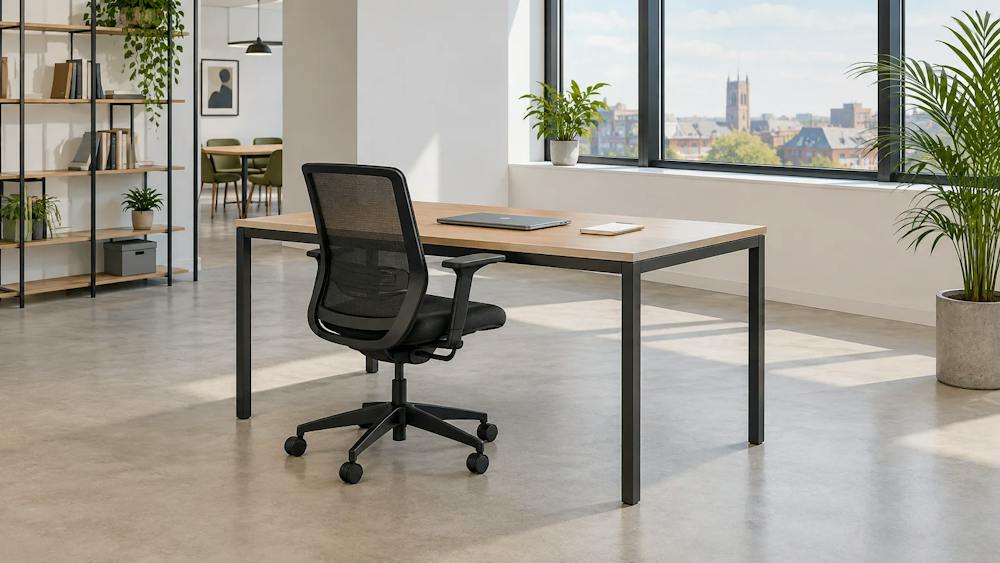
A hot desk is a workstation you use without having it assigned to you permanently. It suits people who need a professional place to work occasionally, or whose working week moves between home, the office and other locations. If you are comparing local options, explore our flexible workspaces in Birmingham.
The idea sounds simple, but the details matter: a shared desk is only useful if it is available when you need it and supports the work you plan to do. Think about how often you will use it, whether you need to leave equipment behind, and how much consistency your work requires.
What does a hot desk mean in practice?
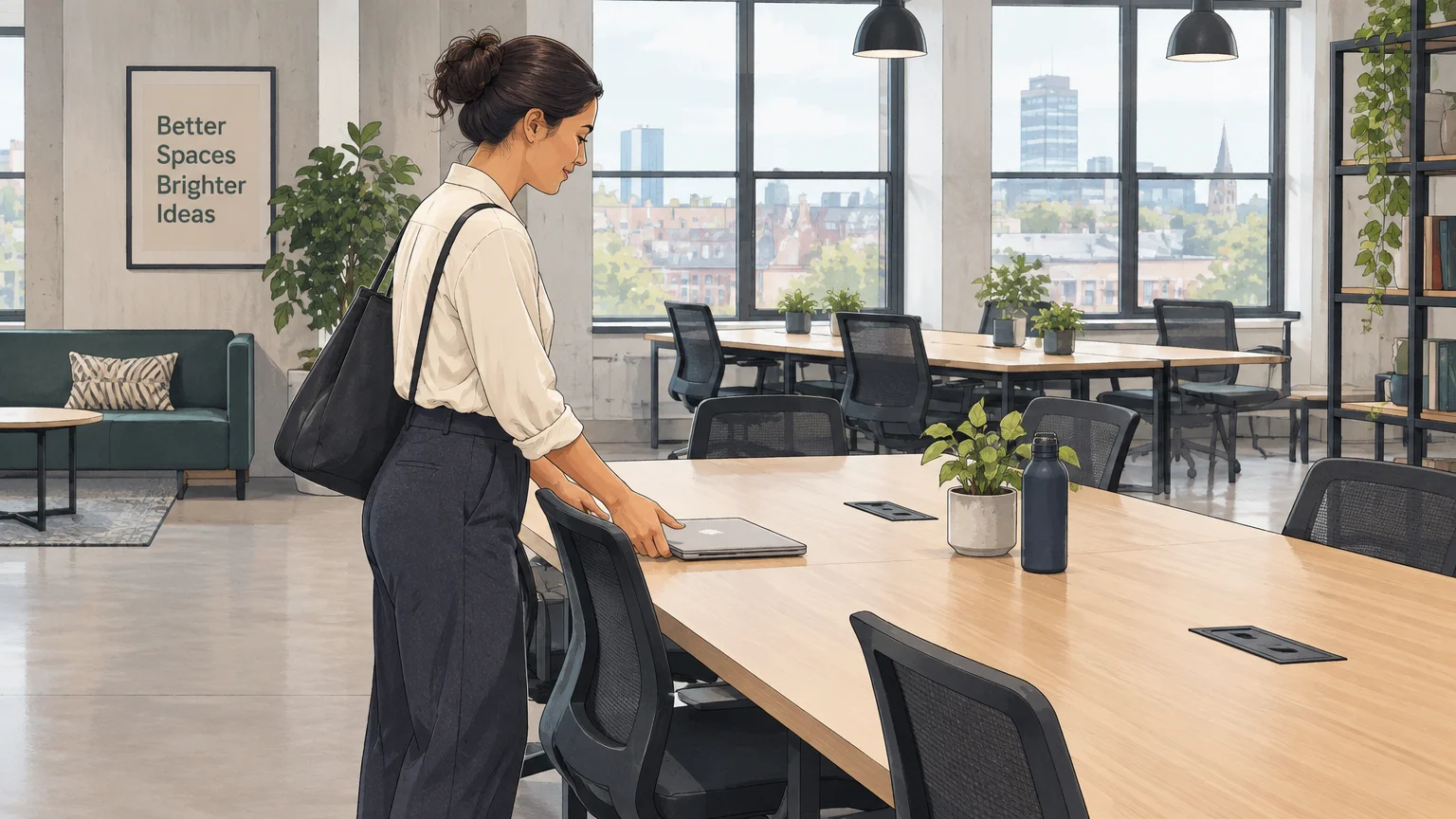
In hot desking, desks are shared rather than permanently allocated. You take an available workstation for your session, then leave it ready for the next person. The exact arrangement depends on the workspace: some desks are taken as they become free, while others may require a booking or check-in.
The key point in the hot desk meaning is that the seat is temporary, not yours to keep. A coworking space might offer this type of seating, but shared areas are not automatically the same as a guaranteed hot desk. Confirm what your access includes before you arrive.
Hot desk vs dedicated desk: what changes?
A dedicated desk is assigned to you, usually on an ongoing basis. You have a consistent place to work and may be able to keep some equipment there, subject to the workspace’s rules. A hot desk gives you more choice of when and where to sit, but you should expect to set up and pack away each time.
Consider a hybrid worker who visits a workspace once or twice a week. An unassigned desk may be practical if they carry a laptop and do not need a permanent setup. Someone who works there most days, relies on specialist equipment or needs a familiar environment may prefer a dedicated desk. The better fit depends on use, not simply on the name of the desk.
Ask about the specific terms before comparing costs. Check whether access is by the hour, day or membership, what facilities are included, and whether you can leave belongings securely. A low access fee is not necessarily better value if you need extra services or a more stable workspace.
How does hot desking fit hybrid work?
Hot desking can give people a place to work without requiring a permanently assigned seat for every person. That flexibility is useful when colleagues attend on different days, but it works best when people know how to find a suitable desk and what to expect when they arrive.
JLL’s 2026 global benchmark found that 80% of surveyed organisations had a hybrid programme, while 62% required fixed in-office days. These global figures describe workplace policies, not demand for hot desks at a particular location. For teams, the practical takeaway is to coordinate attendance and confirm whether enough suitable workstations are available on shared office days.
Good desk-sharing routines also reduce friction. Agree how to select a desk, where calls are appropriate, how to handle equipment and what to do if a preferred area is full. If your team needs confidential conversations or quiet focus, make sure there are suitable spaces beyond the shared desk.
What are the advantages and trade-offs?
The main advantage is flexibility: you use a workstation when it suits your schedule, without maintaining a permanent personal setup. Shared seating can also put you in a communal work environment rather than working alone. For occasional users, a day-based access option may be more appropriate than committing to ongoing workspace.
There are trade-offs. You may need to carry your equipment, adjust to a different seat or nearby noise, and avoid assuming the same desk will be free next time. A shared workstation also calls for a consistent clean desk routine, including taking personal items with you and leaving the surface tidy.
Gensler’s 2026 workplace survey, based on responses from 16,459 full-time office workers across 16 countries, found that workers spent an average of 26% of their workweek in locations other than home or the office, including coworking spaces and client sites. The survey findings describe a mix of work locations, not hot-desk use specifically. They offer context for why some people value having a third place to work, while the right setup still depends on their tasks and preferences.
What should you check before using a shared desk?
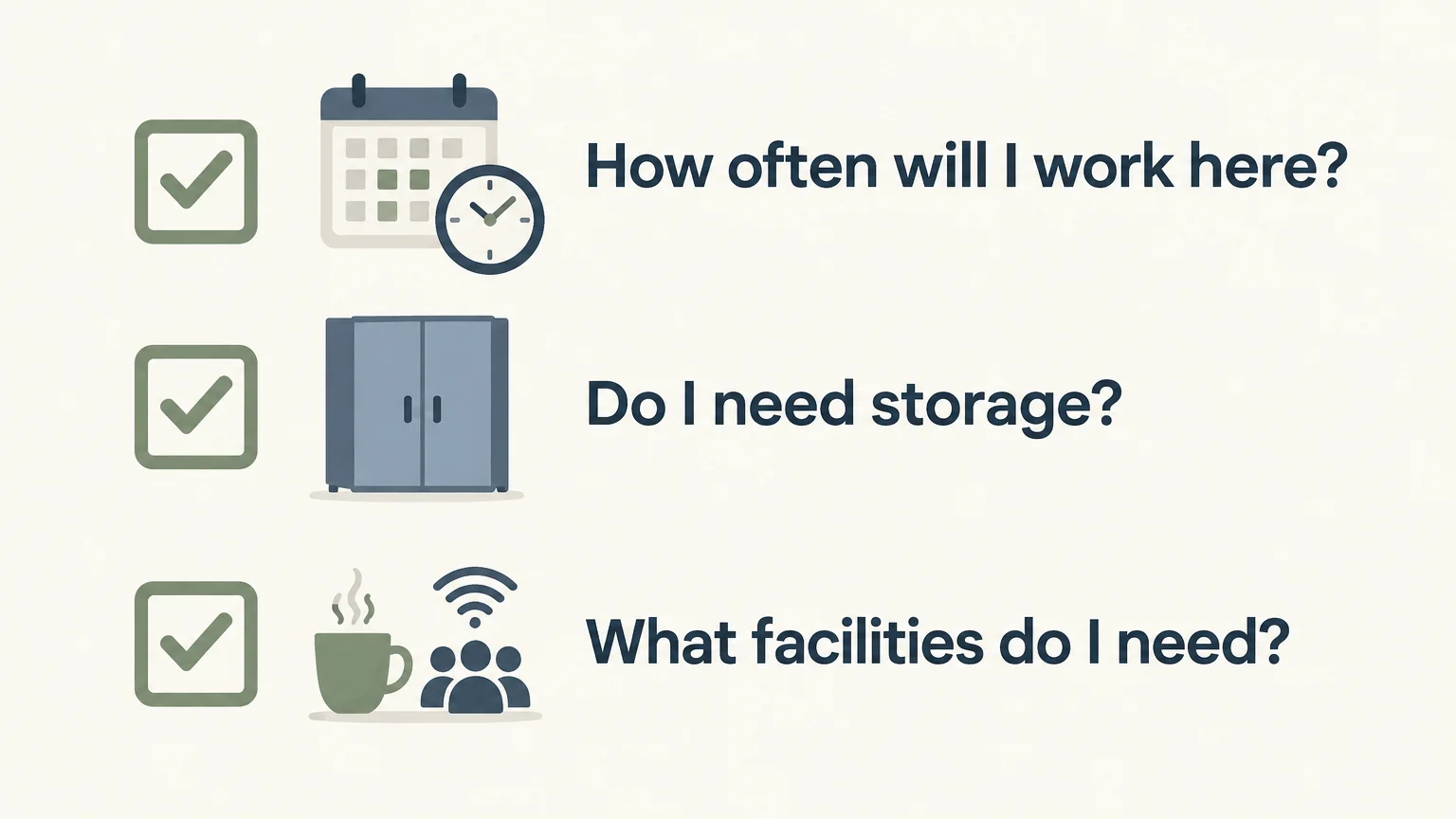
Before you choose a hot desk, match the access arrangement to your working pattern. Use these checks to avoid paying for a setup that does not meet your needs:
- Availability: Is the desk first come, first served, or does it require a booking?
- Access: What hours and entry arrangements apply to your chosen option?
- Equipment: Are power, screens, Wi-Fi and other essentials available, or should you bring your own?
- Privacy: Is there a quiet area or somewhere suitable for calls and confidential work?
- Storage and etiquette: Can you leave anything behind, and what is expected when you finish?
For context, CBRE’s 2026 global workplace benchmark reports that companies using assigned seating declined from 83% in 2021 to 55%, while hybrid and desk-sharing models rose from 12% to 36%. Those figures track reported workplace models, not the quality or availability of any particular hot desk. They reinforce the value of checking the actual arrangement rather than assuming every shared workspace works the same way.
Can you use coworking space as a hot desk in Birmingham?
In Birmingham, look for a shared workspace that fits the work you need to do, then confirm whether its access option includes an unassigned workstation. At BLOCK, we provide collaborative coworking areas and lounges for people who do not need a private office. Our coworking day passes in Birmingham page covers occasional access, while the exact desk arrangements and inclusions should be checked with us directly.
If you need ongoing access rather than a one-off visit, our workspace membership for hybrid workers page is relevant to comparing options. BLOCK Birmingham and BLOCK Bristol are open 24 hours a day, but opening hours alone do not confirm the access terms for a particular booking. Ask about the access option, desk availability and facilities that matter to your work before making plans.
Choose the desk that fits your routine
A hot desk gives you a shared place to work without a permanently assigned seat. It is a sensible option when your schedule is flexible and you can work with a temporary setup. If you need consistent equipment, storage or a familiar seat, compare it with a dedicated desk. In Birmingham, confirm the access terms, availability and facilities before selecting a workspace, then choose the arrangement that supports the way you actually work.
Explore shared workspace options
If you need occasional workspace or a regular base, consider which access pattern best suits your routine. Our coworking areas and lounges provide shared workspace, while Day Passes are intended for temporary or occasional access. Flexible membership packages provide an ongoing access option.
At BLOCK, our membership options are described as transparent, with no hidden costs or surprises. Our Birmingham location is open 24 hours a day, though the access arrangements for your chosen option should be confirmed with our team. Explore our shared coworking areas and lounges and contact us to discuss which workspace format fits your needs.
Frequently Asked Questions
What is the difference between hot desking and coworking?
Hot desking describes using an unassigned workstation instead of having a permanent desk. Coworking describes a shared workspace environment, which may include hot desks, lounges or other areas.
Do you need to book a hot desk?
Booking rules depend on the workspace and access option. Check whether desks are reserved in advance or used when available before you travel.
Is a hot desk the same as a dedicated desk?
No. A hot desk is shared and temporary, while a dedicated desk is assigned to you for ongoing use. Consider whether you need a consistent setup or storage.
What should you bring to a hot desk?
Bring the equipment you need unless the workspace confirms it is provided. A laptop, charger, headphones and any work materials you rely on are a practical starting point.
Does BLOCK offer shared workspace in Birmingham?
Yes, we provide collaborative coworking areas and lounges in Birmingham. Day Passes support temporary or occasional access, but please check directly whether your selected option includes an unassigned desk and what facilities are available.