Which workspace amenities will still matter after the novelty wears off? A useful checklist prioritises the conditions people rely on every day, then considers extras as supporting benefits. For Birmingham teams comparing flexible offices or coworking, our article on workspace perks like gyms and cafés explains how wellbeing features can fit into a productive workday.
Start with a modern workspace amenities checklist built around comfort, suitable lighting, ventilation, dependable connectivity, and places to focus, meet and take breaks. In the UK, HSE’s workplace guidance identifies essentials such as ventilation, suitable lighting, enough space and seating, drinking water, and a place to rest and eat. These basics matter more than an impressive list of optional perks.
1. Check the essentials before the extras
First, look at the conditions that support a normal working day. A stylish lounge cannot make up for uncomfortable seating, poor lighting, stuffy rooms or too little space to work safely. Treat facilities such as clean toilets, drinking water, rest areas and suitable seating as baseline considerations, not premium add-ons.
Check whether the workspace feels clean and well maintained, and whether walkways are clear. Look for adequate ventilation and lighting suited to desk work. A window is welcome, but practical questions matter too: does daylight create screen glare, and can you adjust your position or lighting to suit the task?
As you compare options, distinguish between facilities that are present and facilities that work well. A meeting room, for example, is more useful when it has enough space, dependable connectivity and access to power. A pleasant break area matters most when it gives people a comfortable place to step away from their desks.
2. Assess comfort and control in everyday use

A chair can seem comfortable during a brief visit but feel different after several hours. Check whether ergonomic seating supports a comfortable working position and whether desk space suits the work people actually do. Consider whether screens, chairs and work surfaces can be adjusted, especially if several people share the same area.
Control over local conditions also matters. Can someone move to a quieter area, adjust a task light or choose a different seat if the temperature feels uncomfortable? A study first published online in December 2024 analysed UK office surveys collected between 2012 and 2022, covering 111 buildings and 10,870 individual responses. The UK office study examined relationships between satisfaction with indoor conditions, personal control and perceived productivity. Its findings make a useful inspection question clear: do people have practical choices when a shared environment does not suit them?
Listen to the space as well as looking at it. Background conversation may be fine in a social area but distracting beside desks used for concentrated work. Where possible, visit when the space is in use and notice whether noise, temperature and lighting remain comfortable.
3. Match the workspace to different tasks
One open room rarely suits every activity. People may need a quiet setting for concentration, shared tables for teamwork, comfortable lounges for informal conversations and enclosed rooms for private calls or meetings. A good mix of focus zones and collaboration spaces lets people choose a setting that fits the task without forcing every activity into the same area.
Check the details of meeting facilities before you rely on them. Ask whether rooms are available when your team needs them, whether the layout supports the group size, and whether power and any required presentation equipment are accessible. If rooms are shared, find out how access works and whether nearby work areas are likely to be affected by meeting noise.
If you are assessing a coworking space in Birmingham, pay attention to how shared areas feel during a normal workday, not only during a quiet tour. Our article on signs of an unprofessional coworking space offers further points to consider when evaluating the environment and its day-to-day presentation.
4. Inspect connectivity, power and maintenance
During a visit, test the practical details that can otherwise interrupt work. Ask whether reliable connectivity reaches the places people will use, including meeting rooms and quieter corners. Check that power outlets are convenient for desk work and charging, without trailing cables creating an obstruction.
For hybrid meetings, find out whether the room setup supports the way your team connects with remote colleagues. Do not assume that a room labelled for meetings includes the equipment or connections you need. Confirm what is provided and bring any essential device or cable requirements into the conversation.
A 2026 comparative study of contemporary UK offices examined indoor environmental quality and occupant perceptions, including ventilation, lighting and maintenance practices. The 2026 office study offers a useful prompt for workspace visits: look beyond the amenities list and assess the condition of the environment itself. Ask how routine issues are reported and handled, particularly if you expect to use the space regularly.
5. Consider breaks, access and useful extras
A coffee point or comfortable lounge can make breaks easier and provide a change from desk work. Depending on how people commute or spend their day, everyday amenities such as bike storage, changing facilities, a roof terrace or fitness facilities may also be useful. Weigh these against the needs of your team rather than treating a longer amenities list as an automatic advantage.
Access arrangements deserve the same attention. Check when you can enter, whether access fits your working pattern, and how the chosen membership or pass works. For occasional use, compare the available day-use option with your actual schedule. For regular use, consider whether a dedicated office, shared workspace or ongoing access arrangement is more suitable.
At BLOCK Birmingham, our One Colmore Square workspace is open 24 hours a day, and our workspace formats include private offices, coworking areas and lounges. Across our supporting facilities, options include coffee service, fitness facilities, roof terraces, event spaces, bike storage and changing facilities. Availability varies by location, so please check which amenities are provided at the site you plan to use.
6. Use this checklist during a workspace visit
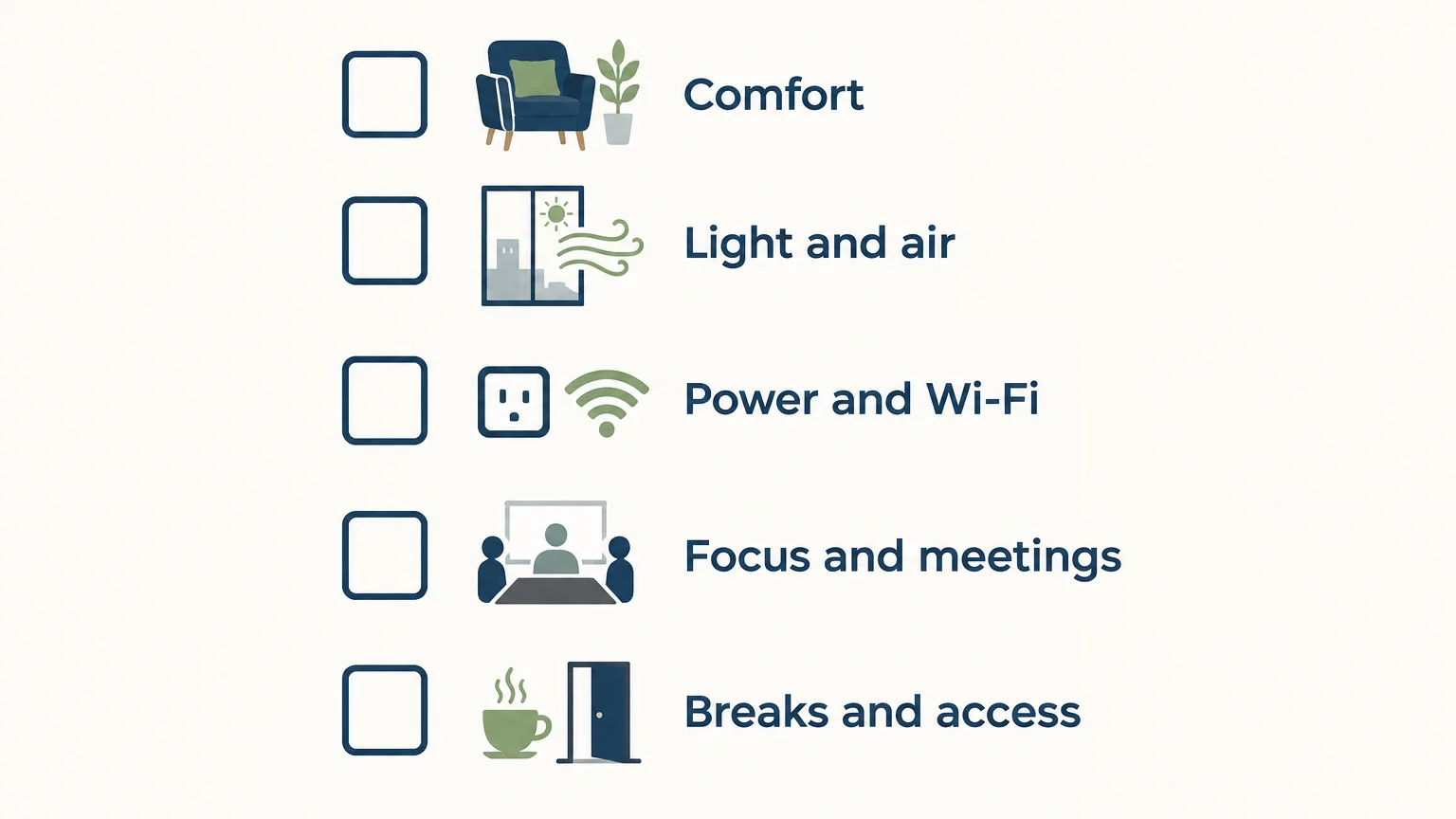
Before you decide, take a short tour with your team’s real working patterns in mind. Use these checks to turn an appealing first impression into a practical assessment:
- Comfort: Are the seating, desks and temperature suitable for a full working session?
- Light and air: Is lighting comfortable for screens, and does the space feel adequately ventilated?
- Power and Wi-Fi: Can people connect and charge devices where they are likely to work?
- Focus and meetings: Are there suitable settings for quiet work, calls and group discussions?
- Breaks and access: Do the break facilities and opening arrangements fit the way your team works?
Ask which facilities are included with your chosen access option, which vary by location, and what you should arrange separately. If possible, try the space at a time similar to your expected working hours. A brief real-world test can reveal whether the layout, noise levels and access arrangements suit your routine.
Choose facilities that fit the way you work
A practical workspace amenities checklist starts with comfort, suitable conditions, connectivity and the right mix of settings. Extras are valuable when people will use them, but the most useful test is how the space supports a real working day. If you are comparing options in Birmingham, assess the environment in person and confirm what is available at your chosen location.
Find a workspace that fits your day
The right setting depends on whether you need a regular base, a place to work occasionally or rooms for team activity. Compare the space, facilities and access arrangements against the way you and your colleagues plan to work.
We provide private offices, collaborative coworking areas and lounges, flexible membership packages, Day Passes and meeting facilities at BLOCK Bristol. Our Birmingham and Bristol spaces are open 24 hours a day. Explore our workspace options and amenities, and check with us about the facilities available at your preferred location.
Frequently Asked Questions
What should a modern workspace amenities checklist include?
Include comfortable seating, suitable lighting, ventilation, reliable connectivity, power, focused work areas, meeting space and facilities for breaks. Then check access arrangements and any extras that matter to your team.
Which workspace amenities matter most for focused work?
Comfortable seating, appropriate lighting and a quieter place to concentrate are useful starting points. Reliable connectivity and convenient power also help people work without avoidable interruptions.
Are gyms and cafés essential office amenities?
No, their value depends on whether people will use them and whether the essentials are already in place. Our supporting facilities include coffee service and fitness facilities, with availability varying by location.
What should Birmingham teams check during a workspace visit?
Assess comfort, lighting, ventilation, connectivity, meeting options and access at a time that resembles your expected working day. Confirm which facilities are available at your chosen location.
Can a flexible workspace suit occasional use?
It can, if the access option fits your schedule and the facilities you need. Our Day Passes provide occasional workspace access; check the relevant location for specific details.