
A useful connection rarely starts with a perfect pitch. It may begin with a greeting over coffee, a question about someone’s work, or a practical offer to share a contact. In a coworking environment, repeated low-pressure encounters can make those openings easier. Our community-led approach reflects the benefits of joining a workspace community, but meaningful networking still depends on how thoughtfully you approach people.
For professionals in Birmingham, shared work areas can put independent workers, founders and small teams within easy conversational reach. Yet proximity alone does not create trust. The most useful networking in a coworking space starts with curiosity, patience and a willingness to make the exchange valuable for both people.
Does sharing a workspace automatically build your network?

A desk beside other people gives you opportunities to meet them, not an automatic professional network. A 2025 case study of one coworking community in Petrer, Spain, found that permanent co-location alone did not significantly increase knowledge exchange. Social and organisational proximity mattered, while temporary proximity could still help.
Apply that distinction to your working day: being present is a starting point, not a networking strategy. Small, repeated interactions can help you recognise familiar faces and build trust over time. However, people may be working to deadlines or seeking quiet, so let their cues guide whether a conversation is welcome.
Start with a small, well-timed introduction
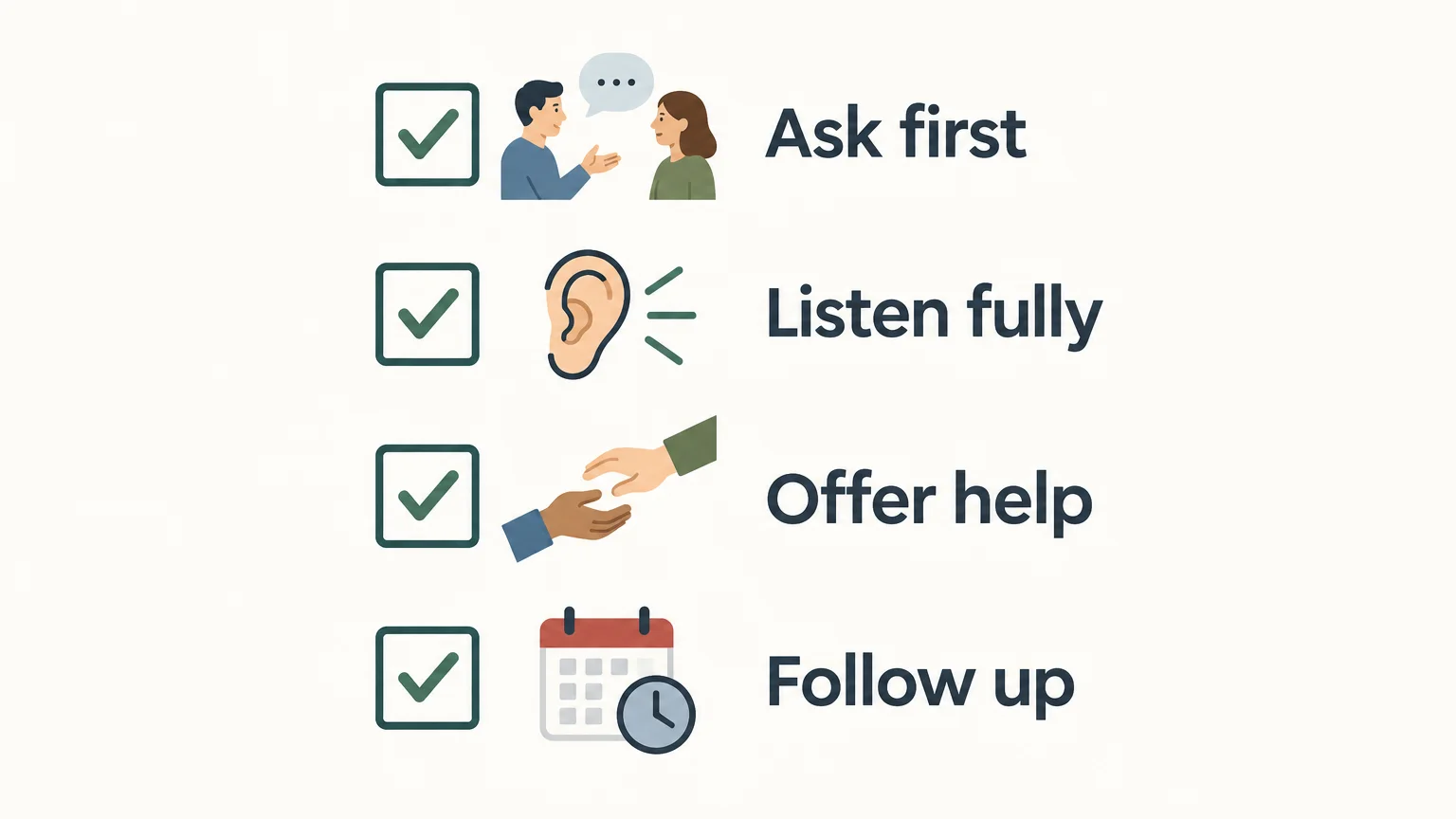
For example, if you have seen someone in the kitchen a few times, a simple greeting can be enough to open a conversation. Introduce yourself, then ask an easy, relevant question, such as what brings them to the workspace or what they are working on today. Keep your opening brief and give the other person room to respond.
A low-pressure introduction does not require a rehearsed pitch or a request for business. Share a little about your own work, but avoid turning the exchange into a monologue. If the other person seems interested, continue; if they give short answers or return to their task, end the chat politely.
That approach also makes it easier to discover shared interests without assuming that every member is a prospective client. You might learn that someone has useful experience, knows a relevant local group, or simply has a different perspective on a problem you are solving. Let familiarity develop at a natural pace.
Use shared areas without interrupting focused work
Picture a busy morning: a lounge or coffee area may feel more open to conversation than someone’s desk, but context still matters. Use shared areas when you want to be approachable, and notice whether others appear available before starting a discussion. A smile or brief greeting can test the moment without demanding attention.
Respect signs that someone is concentrating, on a call, wearing headphones or meeting a colleague. Do not treat a shared workspace as an invitation to interrupt anyone who happens to be nearby. At BLOCK, our collaborative coworking areas and lounges give people a shared setting alongside private offices for those who need dedicated space. For another perspective on the value of a community setting, read why businesses choose community workspaces.
If a conversation starts, ask whether it is a convenient time before going into detail. Keeping an initial exchange short shows consideration and makes it easier to continue another day. When events or informal gatherings are available, they can also provide a clearer context for conversation than approaching someone mid-task.
Make each connection useful in both directions
What turns a pleasant chat into a professional relationship? Often, it is active listening and an exchange that respects both people’s time. Ask about the other person’s work, listen for what they need, and offer relevant experience only when it genuinely helps. You can also ask for advice, provided your request is specific and reasonable.
A 2024 study analysed responses from 77 valid respondents to examine associations between networks developed in coworking spaces and business performance. It is useful context, not a promise that meeting people will bring clients or growth. In your own practice, the relevance and quality of an exchange matter more than the number of contacts you collect.
Look for two-way value rather than an immediate return. You could share a resource, introduce two people whose work seems complementary, or offer a useful observation. Do not assume that help creates an obligation. Professional relationships are stronger when both people remain free to accept, decline or continue the conversation later.
Protect focus, privacy and professional boundaries
In an open workspace, a friendly atmosphere does not remove the need for discretion. Avoid asking about confidential projects, sharing someone else’s details without permission, or discussing sensitive work within earshot of others. If a topic needs privacy, suggest moving to a suitable private setting rather than pressing ahead in a communal area.
Clear professional boundaries help people feel comfortable returning to shared spaces. Keep your voice considerate, respect personal space, and avoid repeated approaches when someone has shown they are not available. If you are considering how everyday behaviour affects the atmosphere, our article on what makes a coworking space feel unprofessional explores the subject further.
Networking should fit around people’s work, not compete with it. A short, respectful exchange can be more welcome than a lengthy conversation at the wrong moment. When you are unsure, ask whether now is a good time and accept the answer graciously.
Follow up with care, not pressure
A January 2026 WTCA special report, summarising Latin American experts’ views from a December 2025 survey, described relationship-building as coworking’s main secondary benefit. That regional assessment is not Birmingham-specific evidence, but it underlines a useful point: networking can matter without making every conversation a transaction.
After meeting someone, follow up only if there is a genuine reason to continue. Mention a detail from your discussion, suggest a useful resource, or ask a concise question related to what you discussed. A respectful note is enough; avoid sending repeated messages or treating silence as an invitation to chase.
- Note the shared interest or topic you discussed.
- Send a brief message that reminds them where you met.
- Offer a relevant resource or next step without pressure.
- Stay in touch when you have a natural reason to reconnect.
For professionals building connections in Birmingham, consistency can matter more than attending every event or meeting as many people as possible. A few genuine conversations, followed by considerate contact, give relationships room to develop alongside your work.
Build connections one conversation at a time
In Birmingham and elsewhere, meaningful coworking connections grow through small introductions, reciprocal help and respect for other people’s focus. Choose moments when conversation is welcome, listen carefully and follow up with a clear reason. Treat networking as a relationship to nurture, not a shortcut to immediate business, and let trust develop at a pace that suits both of you.
Explore flexible workspace options
The right setting can make a regular working routine more sociable while still giving you room to focus. Choose a workspace for the way you need to work, rather than expecting the room itself to deliver new clients or partnerships.
At BLOCK, our portfolio includes private offices, collaborative coworking areas, lounges, flexible memberships and Day Passes for occasional access. Our memberships are transparent, with no hidden costs or surprises. Explore our workspace options to find a setting that fits your routine.
Frequently Asked Questions
How do you introduce yourself in a coworking space?
Choose a moment when the other person appears available, introduce yourself briefly and ask a simple question about their work. Keep the exchange relaxed and let their response guide whether you continue.
Do coworking spaces guarantee useful business contacts?
No, sharing a workspace creates opportunities to meet people but does not guarantee a professional relationship or business outcome. Trust develops through relevant, considerate interaction over time.
How often should you network in a coworking space?
There is no required schedule; brief, genuine conversations can fit naturally into your usual routine. Prioritise work and follow the other person’s cues rather than trying to meet everyone.
Can a coworking Day Pass help you meet people?
A Day Pass can give you occasional access to a shared workspace, but introductions depend on timing and mutual interest. At BLOCK, Day Passes are available for people who need workspace access for a day or as needed.
What should you avoid when networking at work?
Avoid interrupting focused work, pressing for confidential information or repeatedly contacting someone who has not responded. Keep conversations respectful, specific and easy for the other person to end.