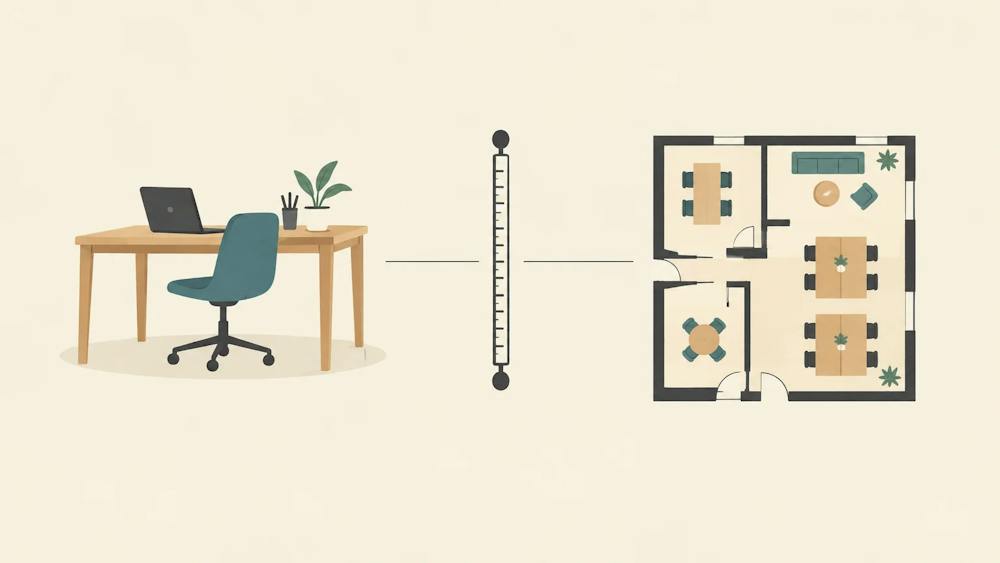
A quoted rent is not the full cost of a workplace. Traditional commercial office rent is usually priced annually per square foot, while serviced and coworking space is often charged monthly per desk or suite. If you are comparing options in Birmingham, our overview of office space costs in the UK offers useful context.
The practical challenge is comparing like with like. A low headline rent may exclude expenses that a flexible workspace fee covers, while a higher desk rate may include services you would otherwise arrange separately. Check the area, capacity, included services, additional charges and agreement terms before setting your budget.
How is office space priced?
Imagine a traditional office quoted at an annual rate per square foot. Multiply that rate by the floor area, then divide by 12 to estimate monthly base rent. For illustration, 1,000 square feet at £30 per square foot each year equals £30,000 annually, or £2,500 monthly, before other costs.
Flexible workspace is commonly quoted per desk per month or as a monthly price for a private suite. Multiply the desk rate by the number of desks you need, or compare the suite price directly. These are different pricing units, so do not compare a desk fee with square-foot rent without accounting for the rest of the bill.
For more context on different rental arrangements, read how much it costs to rent office space. Ask whether a quoted rate is per desk, per office or per square foot, and whether it is monthly or annual. Confirm whether VAT applies and whether figures include any applicable rates or services.
Why does location change the quote?
A premium address and a secondary business district can carry very different rents, even when the office sizes are similar. For Birmingham, Savills reported a prime headline rent of £52 per square foot in Q1 2026, achieved at 3 Chamberlain Square. Its H1 2026 Birmingham report describes that figure as a prime-market benchmark, not a citywide average or a flexible desk rate.
Compare areas by accessibility as well as headline rent. Consider staff journeys, client access, nearby transport and the services your team uses regularly. A less central address could reduce rent, but longer journeys or separate facility costs may change the overall value.
Building quality and fit-out also influence the price. A furnished, ready-to-use office and an unfurnished floor may have different headline rates because they provide different starting points. Check what is already in place before comparing quotes.
What costs sit beyond the headline rent?
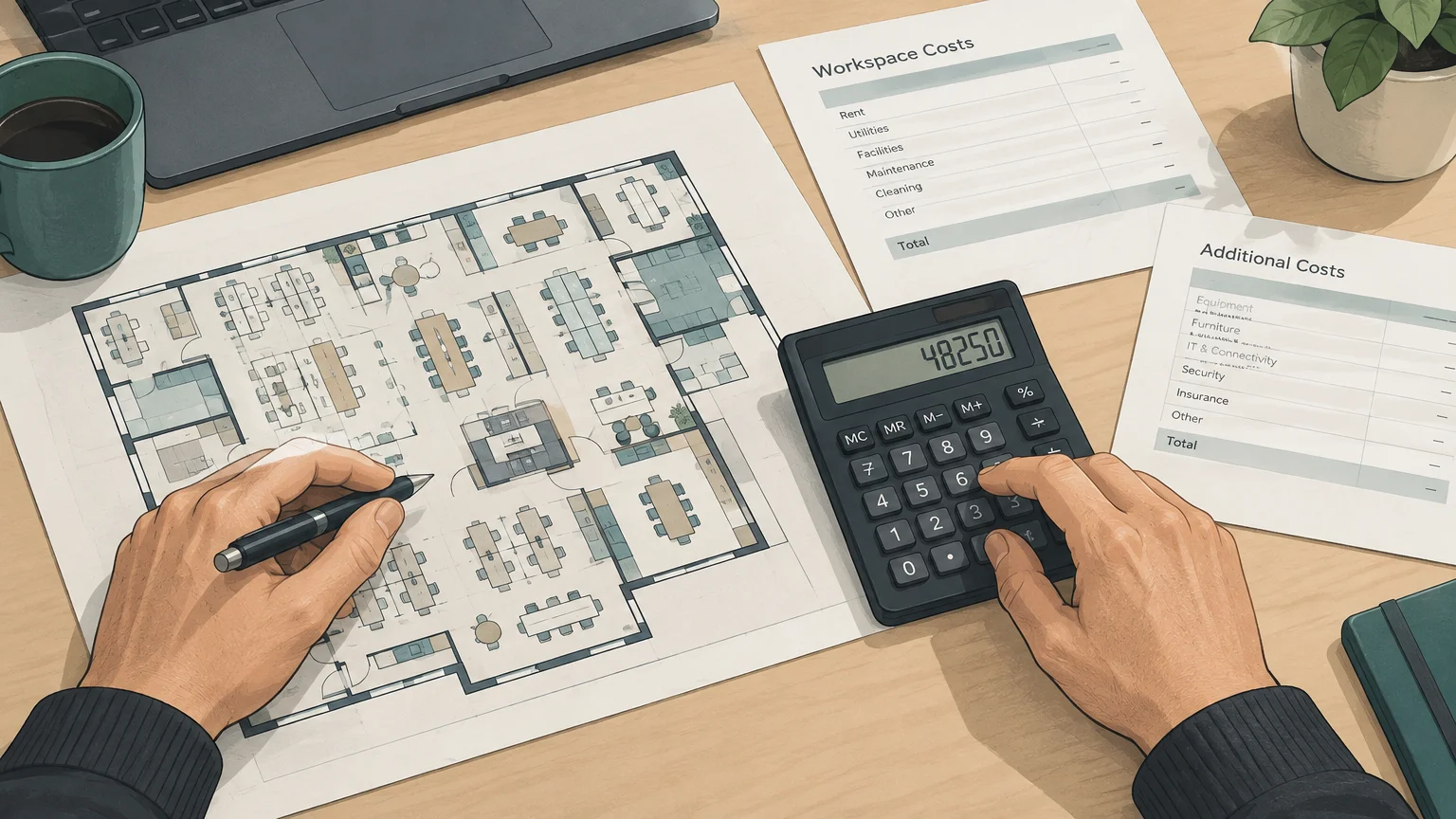
A £2,500 base rent does not necessarily represent the full monthly budget. Depending on the agreement, additional costs could include business rates, service charges, utilities, insurance, cleaning, internet, maintenance and fit-out. Check the contract and cost schedule to establish which charges apply and how they are calculated.
Flexible workspace fees may bundle some services, but inclusions differ between providers and agreements. Check whether meeting facilities, printing or other shared amenities are included, charged separately or subject to conditions. A bundled price is easier to budget for only when you know exactly what it covers.
LSH’s 2026 Total Office Cost Survey compares costs across more than 50 UK locations and 22 measures, with comparisons per square foot and per employee. The edition’s stated cost position is June 2025, so treat it as a dated comparison framework rather than a current Birmingham quote. See LSH’s survey methodology for the cost categories it considers.
How do leases and flexible workspace differ?
When choosing between a conventional lease and flexible workspace, compare control, setup responsibilities and the full cost structure. A conventional lease typically gives you more control over the premises, but you should budget for applicable running costs and any work needed to prepare the space. Flexible workspace often packages a ready-to-use environment with a monthly desk or suite price.
The exact inclusions and terms vary, so neither headline figure tells the whole story. A 2026 half-year report filed with the UK National Storage Mechanism states that the Big Nine regional office markets recorded 5.6% rent growth in the first half of 2026. That broad market measure is not Birmingham-specific and does not describe flexible desk fees; it shows why you should check the date and basis of any price comparison. Read the filed half-year report for its market context.
If you are weighing contract style against convenience, our guide to leasing versus renting office space explains the distinction. Use your expected time in the space and responsibility for services to compare the options on consistent terms.
How can you compare office quotes fairly?
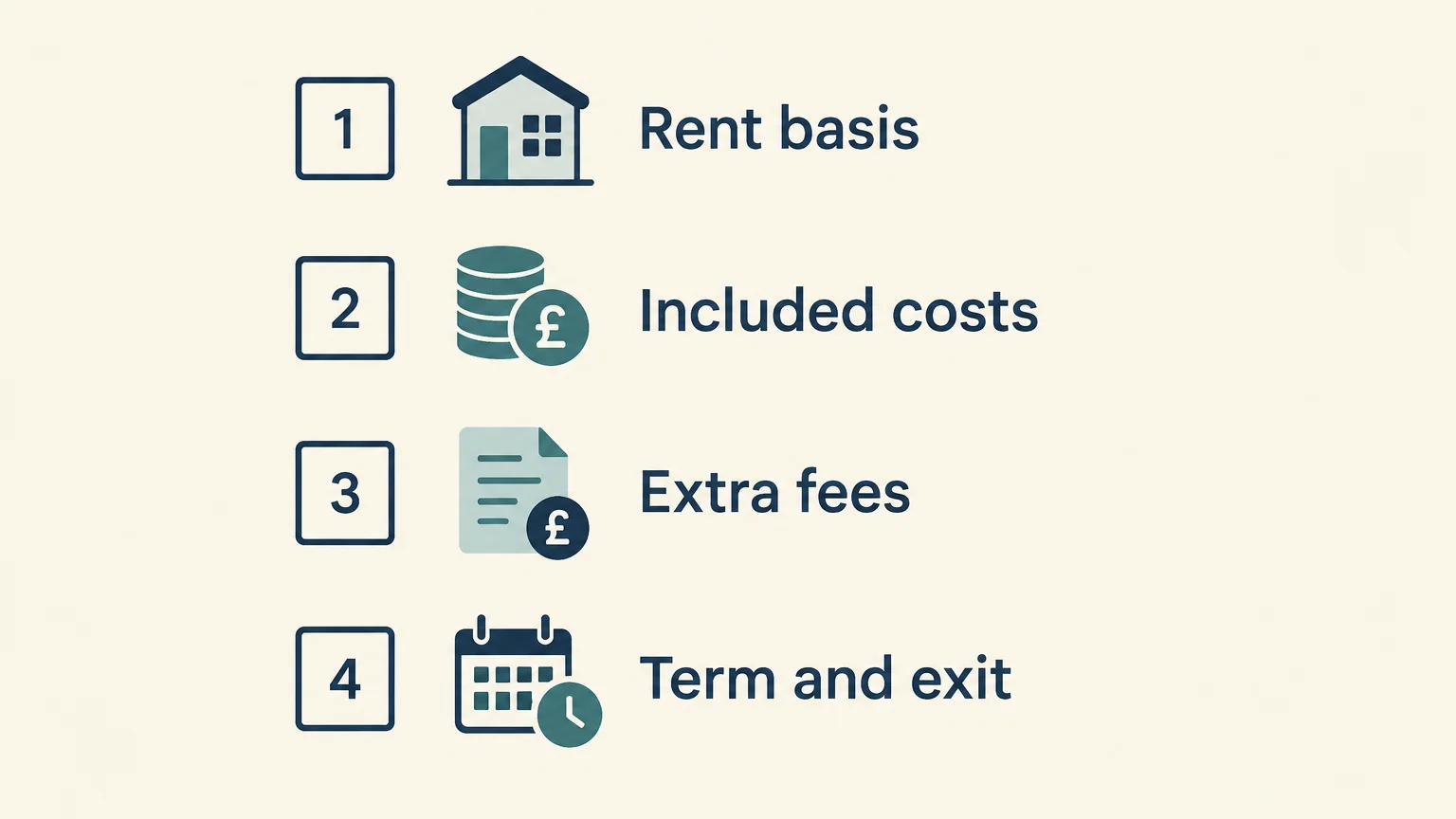
Before you compare offers, put each quote on the same basis. Record the pricing unit, the number of desks or floor area, the monthly or annual amount, and any setup costs. Then check what is included and what is charged separately.
- Rent basis: Confirm whether the price is per desk, per suite or per square foot, and whether it is monthly or annual.
- Included costs: List any utilities, building services, furniture and shared facilities covered by the quoted price.
- Extra charges: Check applicable rates, service charges, VAT, deposits and one-off fit-out costs.
- Terms and access: Review the commitment, notice requirements, access arrangements and how the space can change with your needs.
Also check whether the quoted desk count matches how your team works. Paying for unused desks may not be worthwhile, while insufficient capacity can make a lower quote impractical. If shared space or occasional access fits your needs, our overview of flexible office spaces across the UK introduces those formats.
Make the full cost your benchmark
Understand office space pricing by separating the headline rate from the full cost of occupation. Compare the same unit, timeframe, included services and extra charges, then weigh the terms against your team’s likely use. In Birmingham, a dated prime-market benchmark is not a substitute for a quote that matches your location and requirements.
Explore workspace options for your team
When you have compared the cost models, choose a workspace format that suits how often your team needs a dedicated office, shared desk or occasional base. Our One Colmore Square workspace sits in the Colmore Row Business District.
We provide private offices, collaborative coworking areas, lounges and Day Passes, and our location is open 24 hours a day. Specific prices and package inclusions depend on the option, so contact our team to discuss your requirements. Explore our office space options and consider which format fits your team.
Frequently Asked Questions
Is office rent usually priced per square foot or per desk?
Traditional commercial rent is commonly quoted annually per square foot. Serviced and coworking workspace is often priced monthly per desk or suite, so check the unit before comparing figures.
What additional costs should I check?
Review the agreement for applicable business rates, service charges, utilities, insurance, cleaning, internet and fit-out expenses. Confirm whether VAT applies and which services are already included.
Does a flexible workspace fee include everything?
Not necessarily, because inclusions vary by provider and agreement. Ask for a written breakdown of the fee and any separately charged services or facilities.
Can I use BLOCK Workspace without taking a private office?
Yes. We provide collaborative coworking areas, lounges and Day Passes alongside private offices, giving you different workspace formats for ongoing or occasional use.
How can I compare two office quotes?
Put both quotes on the same basis, including the pricing unit, time period, space or desk capacity, included services, extra costs and terms. Then check that the capacity and access arrangements suit how your team works.