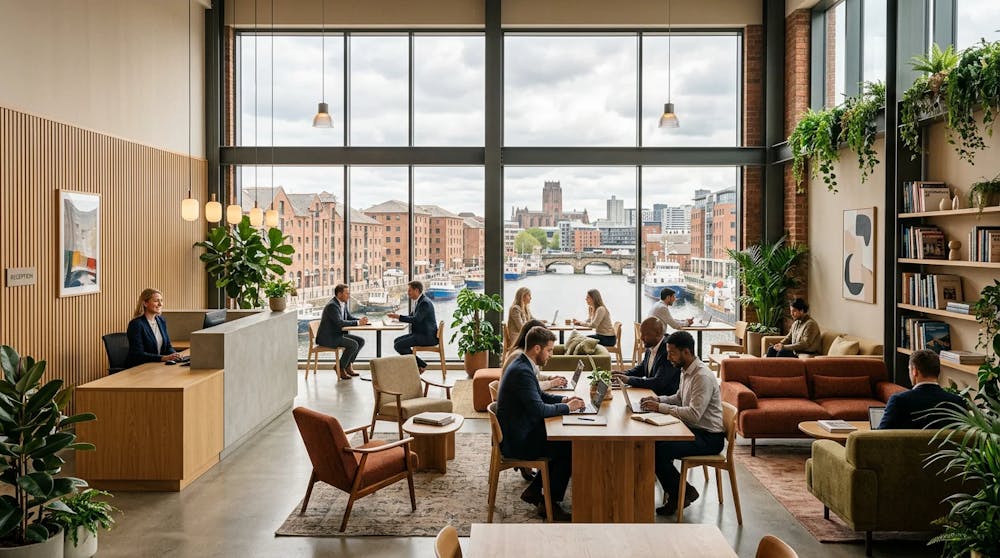
Bristol has quietly become one of the most active regional workspace markets in the United Kingdom, and the appetite for flexible space shows no sign of slowing. If you are weighing up our serviced offices in Bristol against a conventional lease, you are part of a wider shift: businesses want space that scales, predictable costs, and amenities that help teams work well without the burden of a ten-year commitment.
That shift is measurable. The serviced office market in Bristol is part of a national sector that, according to Mordor Intelligence, was valued at USD 4.19 billion in 2026 and is forecast to grow at a compound annual rate of 9.15% through 2031. Demand is driven by hybrid working policies, cost control, and a preference for high-specification, ready-to-use environments over empty shells that require fit-out.
What a serviced office actually includes
Anyone typing "serviced offices bristol" into a search engine is usually weighing convenience against commitment. A serviced office is a private, fully furnished workspace within a managed building, where a single monthly fee covers rent, utilities, cleaning, internet, reception, and shared facilities. You move in, connect, and start working.
This model contrasts sharply with a traditional lease. Rather than negotiating separate contracts for broadband, business rates, furniture, and maintenance, you receive one transparent invoice. Contract lengths are short and adaptable, which suits startups, small and medium-sized businesses, and scaling teams that cannot forecast headcount three years ahead.
The sector is well established nationally. According to IBISWorld, the UK serviced offices industry was worth around £3.0 billion in 2026, spread across roughly 2,445 businesses, from global operators to independent regional providers. Bristol sits firmly within this mature ecosystem.
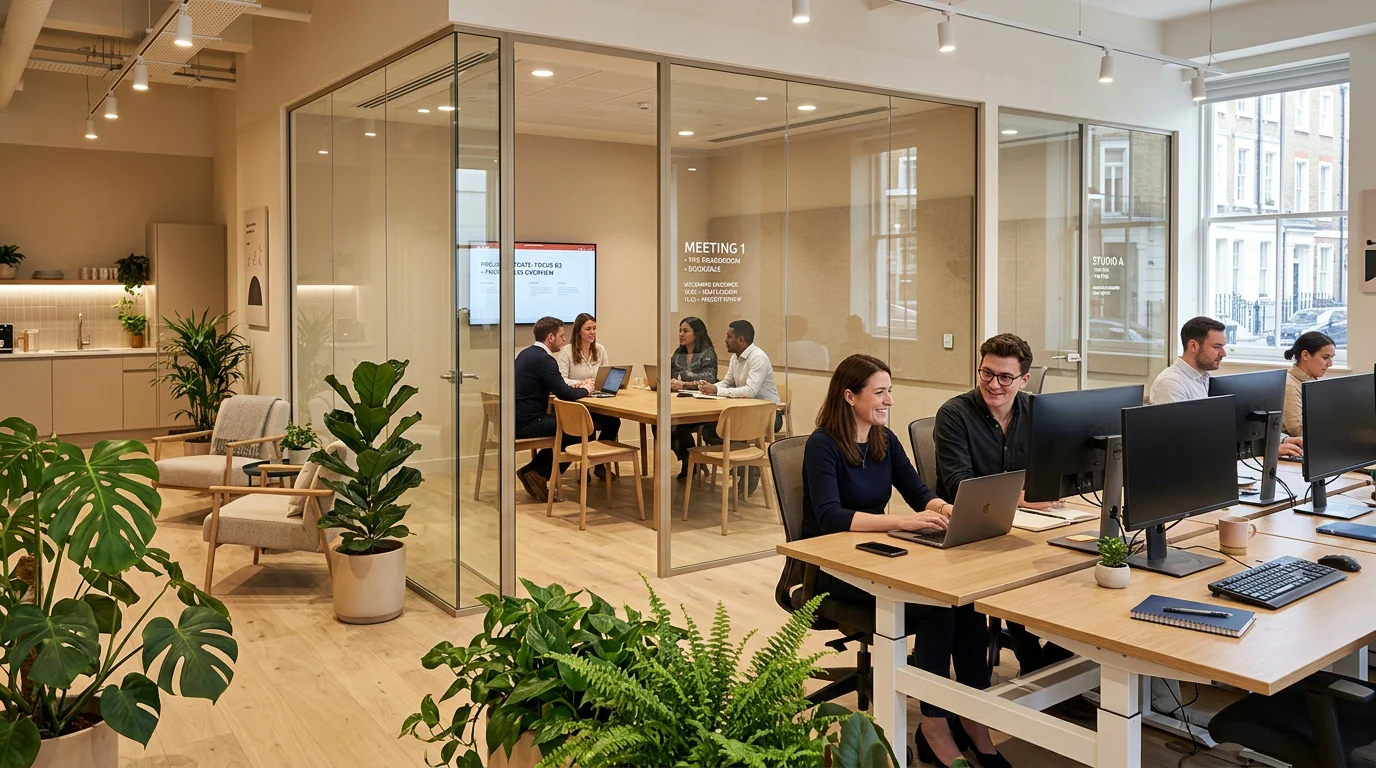
The Bristol flexible workspace market in 2026
Bristol is one of the "Big Six" regional office markets, alongside Manchester, Birmingham, Leeds and Glasgow. Its economy spans aerospace, defence, information technology, financial services and a thriving creative sector, which sustains steady demand for professional workspace.
Supply has grown considerably. According to Rubberdesk, available flexible office space in Bristol increased by 42% quarter-over-quarter in Q3 2025, reaching more than 74,000 square feet, driven by new listings from operators across the city. Desk rates softened slightly to around £350 per person per month in that quarter, yet remained up 9.4% year-over-year, a sign of resilient underlying demand.
Confidence among operators is high. The Savills flexible offices spotlight reported that 85% of operators surveyed globally expected to expand in 2026, with occupancy across UK flexible space holding firm. For occupiers, more supply and healthy competition translate into greater choice and stronger negotiating positions.
What you can expect to pay
Cost is where serviced offices earn much of their appeal. Instead of a large capital outlay for fit-out and furniture, you pay a per-desk or per-office monthly fee. In Bristol, entry-level coworking desks and smaller private suites often sit below the citywide average, while premium harbourside and city-centre buildings command more.
Pricing bands vary widely by size and location. Smaller configurations for one to four people have seen the sharpest price movement as new, lower-cost inventory enters the market, while mid-sized suites for larger teams tend to hold their value. The most important question is not simply the headline rate, but what that rate includes.
This is precisely where hidden costs erode budgets: set-up fees, exit charges, service uplifts, and metered extras. Transparent pricing matters, and it is central to our serviced office solutions, where flexible membership packages come with no hidden costs and no surprises, so you know exactly what you are committing to each month.
| Workspace type | Contract flexibility | Upfront cost | Amenities included | Community access |
|---|---|---|---|---|
| Traditional lease | Low (3 to 10 years) | High (fit-out, deposit) | None as standard | None |
| Coworking desk | High (daily to monthly) | Very low | Shared facilities | Moderate |
| Standard serviced office | Moderate to high | Low | Core facilities | Varies |
| Block Workspace | Ultra flexible memberships | Low, transparent | Yoga studios, gyms, cafés, roof terraces | Vibrant, networking-led |
Choosing the right location across the city
Where your office sits shapes recruitment, client impressions and daily commutes. Bristol offers distinct submarkets: the city centre and floating harbour for a prestigious address, Clifton for character and elegance, and out-of-town business parks near the M4 and M5 for parking and easy road access.
Transport connectivity consistently ranks among the top priorities for occupiers. The Savills survey found that 84% of respondents cited proximity to public transport as a defining factor in an ideal workplace. In Bristol, that points towards addresses near Temple Meads and Bristol Parkway stations, both of which offer fast links to London and the wider UK.
If your growth plans extend beyond the South West, it is worth considering a provider with a multi-city footprint. Teams that later require space elsewhere can extend the same relationship to, for example, our serviced offices in Birmingham, keeping terms and standards consistent as you expand.

Amenities and community: the real differentiator
A decade ago, a serviced office meant little more than a desk, a chair and a phone line. Today the best workspaces compete on experience. Wellbeing amenities, social spaces and a genuine sense of community are now decisive factors, particularly for businesses trying to draw hybrid workers back into the office.
This is where the traditional model falls short and where a modern workspace stands apart. Rather than offering a room and a reception, we combine private offices, daily coworking and lounges with perks such as yoga studios, gyms, cafés and roof terraces. These are not decorative extras; they support productivity, retention and the informal networking that helps small businesses grow.
Flexibility now extends far beyond the contract. It is about giving people a place they actively choose to work in, complete with the community and amenities that a spare bedroom simply cannot match.
Vibrant, networking-oriented communities are a differentiator in their own right. Access to events, shared lounges and a network of fellow professionals turns a workspace into a business advantage, helping teams form partnerships and find talent without leaving the building.
How to choose your serviced office
Before you sign anything, work through a short checklist. It keeps the decision grounded in your real needs rather than the polish of a showround.
- Total monthly cost: confirm what is included and what is charged as an extra, from set-up to exit fees.
- Contract flexibility: check minimum terms, notice periods and the ability to scale up or down.
- Location and transport: weigh proximity to Temple Meads, Parkway and the motorway network against your team's commutes.
- Amenities: assess whether wellbeing and social spaces genuinely support how your team works.
- Community: ask about events, networking and the profile of other members in the building.
Book viewings at several buildings, visit at different times of day, and speak to existing members where possible. A workspace that feels right on a quiet Tuesday morning and a busy Thursday afternoon is a workspace that will serve you well as you grow.
Conclusion
The case for flexible workspace in Bristol is now firmly established, supported by a national sector growing at more than 9% a year and a local market where supply expanded 42% in a single quarter of 2025. For startups, small businesses and scaling teams, a serviced office in Bristol removes the friction of leases, fit-outs and unpredictable overheads, leaving you free to focus on the work itself. When choosing, look beyond the headline desk rate to what is genuinely included, and give proper weight to location, amenities and community. What sets us apart is the combination of ultra flexible memberships, fully transparent pricing and lifestyle perks that people actually want to come in for. To find the right space for your team, explore our serviced office solutions today.
Frequently Asked Questions
How much does a serviced office in Bristol cost?
Desk rates in Bristol averaged around £350 per person per month in late 2025, according to Rubberdesk data. Prices vary by office size and location, with city-centre and harbourside buildings typically commanding more than out-of-town business parks.
What is the difference between a serviced office and coworking?
A serviced office is a private, lockable space reserved for your team, while coworking involves shared, open-plan desks. Many providers, including us, offer both, so you can combine private offices with daily coworking and lounge access under one flexible membership.
Are contracts flexible?
Yes. Serviced offices are known for short, adaptable terms that let you scale up or down as your headcount changes. Always confirm the minimum term, notice period and any set-up or exit fees before committing.