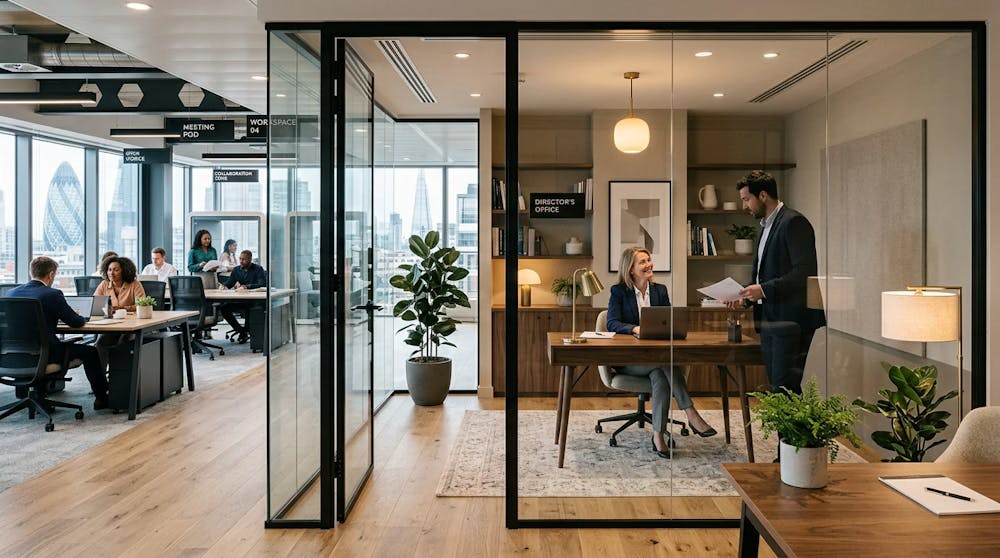
Managed office supply across the UK has grown by a remarkable margin in recent years, with more than 750 buildings now offering the format. That surge reflects a genuine shift in how businesses approach property, moving away from decade-long commitments toward flexible, service-led arrangements. If you want the control of a bespoke workspace without the burden of managing it yourself, managed office space deserves a closer look. To understand where it sits, it helps to compare it with our overview of serviced office options.
The wider context matters here. According to Mordor Intelligence, the UK flexible office market is worth an estimated USD 4.19 billion in 2026 and continues to expand as hybrid working becomes permanent policy. Within that market, managed offices have carved out a fast-growing niche for teams that have outgrown coworking but are not ready for a conventional lease.
What defines a managed office?
So, what are managed offices in practical terms? A managed office is a private, dedicated space that a provider prepares, furnishes, and runs for a single business. You receive a blank canvas, typically a shell space, which is then designed and fitted out to your specification before you move in.
The defining feature is exclusivity combined with service. Unlike shared arrangements, the entire suite belongs to your company. Your brand sits above the door, your team does not share desks or meeting rooms, and a provider handles the operational load behind the scenes.
Everything is wrapped into one predictable monthly payment. This usually covers rent, utilities, internet, facilities management, cleaning, and maintenance. The fit-out cost is often funded by the landlord and spread across the lease term, which reduces the upfront capital you need to commit.
Managed offices versus serviced offices
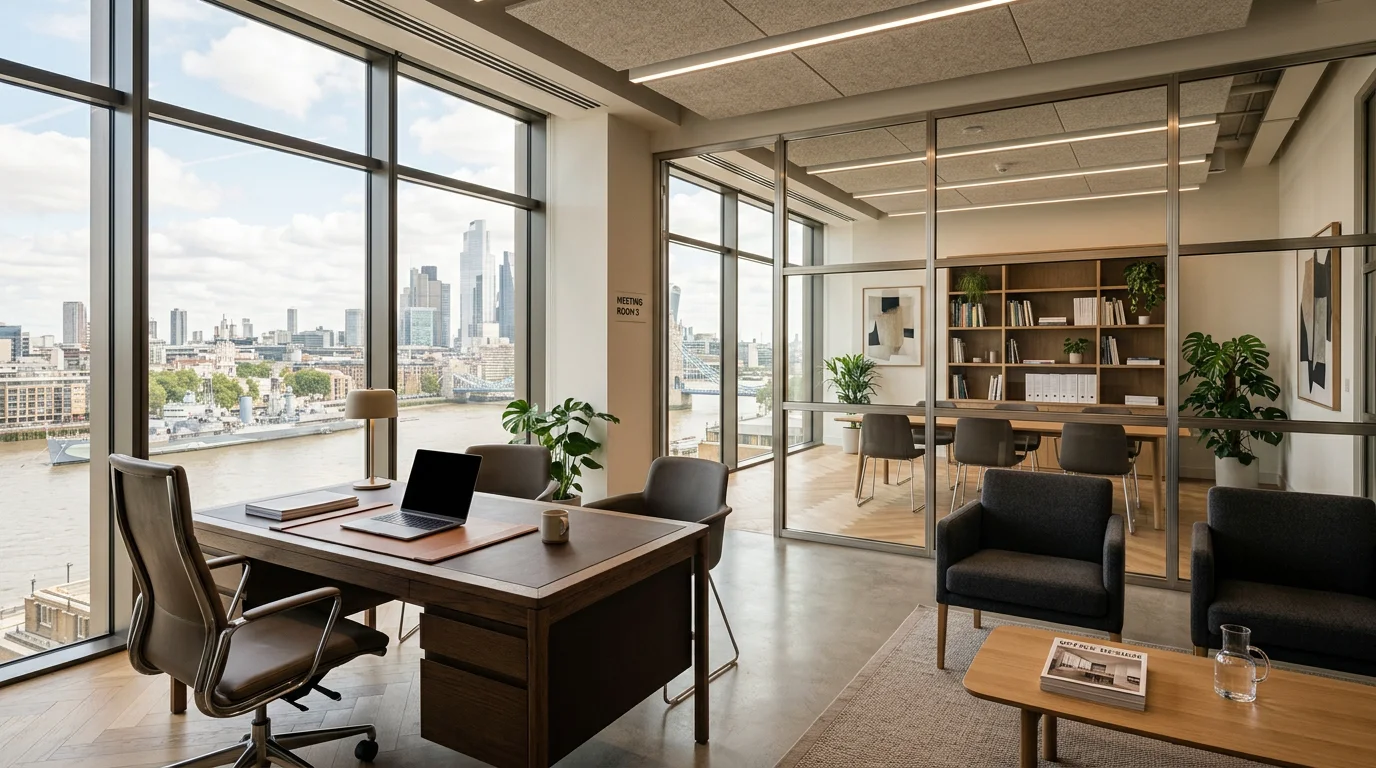
The two terms are often used interchangeably, yet they differ in important ways. A serviced office gives you a ready-to-use private space within a larger building, where communal facilities are shared with other businesses and the provider controls the look and feel. A managed office gives you the whole space, designed around your brand and used by your team alone.
Customisation is the clearest dividing line. Serviced space is move-in ready but largely fixed, while managed space lets you shape the floorplan, choose the furniture, and reflect your identity throughout. If you are weighing the alternatives, you may also consider our private office space in coworking hubs as a middle path.
| Criterion | Managed office | Serviced office | Traditional lease |
|---|---|---|---|
| Space use | Exclusive to your team | Private suite, shared amenities | Exclusive to your team |
| Customisation | High, fully branded | Limited | Full, but you manage it |
| Typical term | 12 to 36 months | 1 to 12 months | 5 to 15 years |
| Billing | Single monthly fee | Single monthly fee | Rent plus separate outgoings |
| Management burden | Handled by provider | Handled by provider | Your responsibility |
| Block Workspace | Flexible, transparent, community-led | Available with amenities | Not applicable |
Both flexible formats remove the legal fees, agents' fees, and stamp duty associated with conventional agreements. The right choice depends on how much control you want and how long you intend to stay.
Why managed offices are gaining ground
The growth of this format has been striking. According to Spaces to Places, managed office supply has increased by roughly 895% since 2019, as landlords increasingly favour operational partnerships over traditional leases. This is not a passing trend; it is a structural change in how office space is delivered.
Demand is following supply. In London, managed office space surged 66% in the four years to 2022, and lead volumes have continued to climb since. The format appeals to two groups in particular: businesses outgrowing coworking who still want flexibility, and established firms seeking to shed the burden of fitting out and running their own premises.
Hybrid working underpins the shift. Many teams now design agile floorplans with fewer desks than headcount, on the understanding that not everyone attends on the same day. A managed space lets you build precisely that arrangement without a long-term financial commitment.

What is included and what it costs
A managed office bundles the essentials into a single, transparent invoice. You can typically expect furniture, cabling, utilities, cleaning, waste removal, on-site security, and access to communal kitchen areas, all coordinated by the provider. The intention is one bill and no surprises.
Pricing varies by city and specification. National desk rates for flexible workspace stood at a median of £498 per desk per month in the second quarter of 2026, according to Tally Workspace, with regional cities remaining considerably cheaper than London. Managed offices generally cost less per square foot than serviced offices while offering far greater customisation.
Regional value is worth emphasising for businesses outside the capital. Figures from CoworkingCafe put the UK median monthly coworking membership at £180 in early 2026, with cities such as Bristol clustering close to that national figure. For teams in the South West, our serviced offices in Bristol illustrate how amenity-rich space can be secured outside London pricing.
Who should choose a managed office
Consider a scenario. A team of thirty has thrived in a coworking hub but now wants a private, secure home that reflects its culture. The founders lack the time or expertise to negotiate a lease and fit out a building. This is precisely the situation a managed office resolves.
The format suits several profiles well:
- Scale-up companies that have outgrown shared desks and want their own branded space.
- Established SMEs seeking to replace a conventional lease with a lower-hassle alternative.
- Corporate project teams or satellite offices needing a dedicated base for a defined period.
- Businesses that value cost predictability and a single point of contact for operations.
If your priority is day-to-day flexibility rather than a permanent private suite, a shared arrangement may serve you better in the short term. You can explore our shared office space in Bristol to compare that lighter-commitment option before deciding.
How to set up a managed office
The process is designed to be efficient. You tour a shell space, confirm the location suits you, and then book a design consultation. From there, the provider co-creates the layout, selects furniture, and delivers the finished office ready for your move-in day.
Timelines are shorter than most people expect. Fit-out for a smaller managed office often takes a matter of weeks rather than months, depending on the complexity of the design and the approvals involved. Upfront costs usually amount to a first rental invoice and a deposit, which keeps the barrier to entry manageable.
Before committing, clarify the term length, any dilapidations obligations, and what happens if your headcount changes. A well-structured managed agreement should allow you to scale within the building as your business evolves.
Bringing it all together
Understanding what managed offices offer comes down to a simple trade-off: you gain a private, branded, professionally run workspace, and in return you commit to a medium-term agreement rather than a rolling monthly one. For teams that have outgrown coworking yet want to avoid the weight of a traditional lease, that trade-off is increasingly attractive. Weigh your growth trajectory, your appetite for customisation, and your preferred location, then choose the format that lets your team focus on the work rather than the building.
Take action with Block Workspace
Choosing the right workspace should feel like an opportunity, not a headache. Whether you need a private office for a growing team, daily coworking access, or a base with genuine amenities, the goal is the same: a space that supports how your people actually work, without hidden costs or rigid terms.
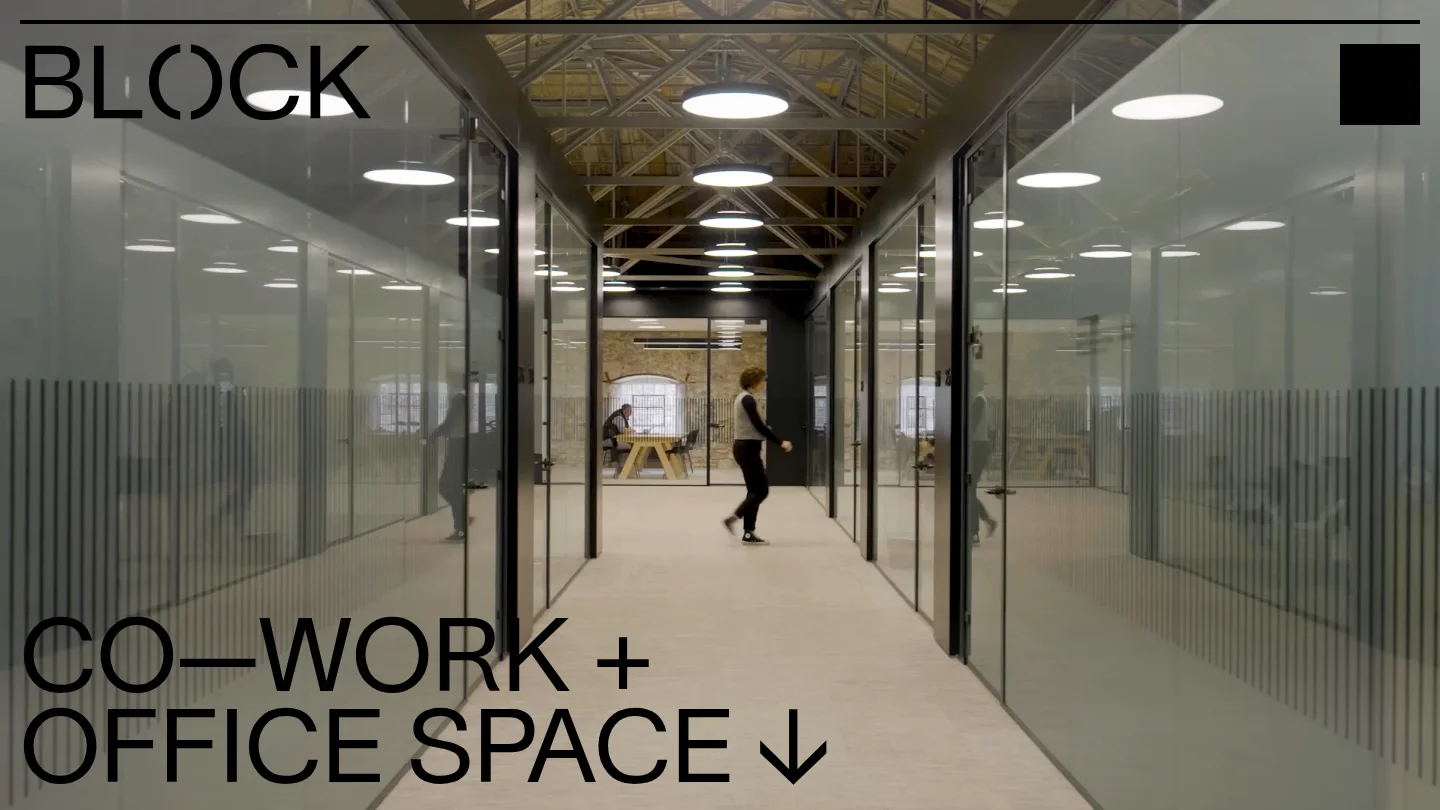
At Block Workspace, we provide stylish, flexible workspaces across Bristol, Plymouth, and Taunton, with ultra flexible membership packages and transparent options. From large private offices and daily coworking to yoga studios, roof terraces, gyms, and cafes, you gain a vibrant community alongside your workspace. Explore our flexible office solutions and find the option that fits your stage of growth.
Frequently Asked Questions
What is the difference between a managed office and a serviced office?
A managed office is a whole, private space designed and branded around a single business, typically on a medium-term agreement. A serviced office provides a ready-to-use private suite within a larger building, where amenities are shared and the provider controls the design.
How long is a typical managed office agreement?
Managed office terms usually range from 12 to 36 months, offering more stability than a rolling serviced contract but far more flexibility than a traditional lease. Some agreements include break clauses or options to expand within the building as your team grows.
Are managed offices more expensive than serviced offices?
Managed offices generally cost less per square foot than serviced offices while offering greater customisation. Initial setup costs can be higher, but the fit-out is often funded by the landlord and spread across the lease term, which reduces the capital you commit upfront.
Can I brand and customise a managed office?
Yes, customisation is the format's defining benefit. You can shape the floorplan, choose furniture and technology, and apply your logo, signage, and brand colours throughout, creating a cohesive environment for staff and clients alike.
Does Block Workspace offer flexible options for growing teams?
Yes. We offer ultra flexible membership packages across Bristol, Plymouth, and Taunton, spanning large private offices, daily coworking, and lounges. Our transparent pricing means no hidden costs, so you can choose an option that matches your stage of development.