Could a membership that looks straightforward on a tour leave your team paying for access or extras you did not expect? What are red flags in a coworking space contract? Start with terms that do not clearly explain what you pay, which spaces you may use, how long you are committed, and how you can leave. If you are weighing options in Birmingham, our article on what to avoid in flexible office memberships can help you frame the questions before you sign.
Treat the written agreement as the reference point, rather than relying on a tour or a verbal assurance. Check that its fees, access rules and services reflect what you were told, and ask for unclear terms to be explained before committing.
Treat the contract as an operating plan, not a quote

A low monthly fee tells you little if the agreement does not explain what that fee buys. Check whether you are paying for a flexible desk, a guaranteed desk, a private office, or access to shared areas. Confirm which facilities are included and which require a separate booking or charge.
Look for specific rules on meeting rooms, guests, storage, printing and shared amenities. If the contract says “subject to availability” or “as agreed” without explaining how access works, ask for the practical limits in writing. That helps you assess whether the membership suits your working routine.
For BLOCK Workspace, our membership packages are positioned as transparent, with no hidden costs or surprises. Still, confirm the price, included services and any extra charges for the particular option you are considering. You can also read how flexible office membership works before comparing plans.
Check the full cost, renewal and exit terms
Could the amount due change after you sign? Ask for a written breakdown of the recurring fee and any separate charges, such as setup costs, meeting-room use, guest access or late payment. Check whether the stated price includes VAT, where relevant, and when payment is due.
Read the deposit deductions carefully. The contract should explain whether you pay a deposit, when it may be returned, and what the operator can deduct from it. Ask how any damage claim will be documented and whether outstanding charges may be taken from the deposit.
Next, map the agreement’s automatic renewal and exit dates on a calendar. Check the initial commitment, notice deadline, renewal period, cancellation method and any early-exit charge. A lengthy notice period or renewal into another fixed term can make a flexible membership harder to leave than you expected.
The Competition and Markets Authority updated its consumer contract guidance on 22 July 2026. Its consumer contract guidance explains that some renewal and cancellation terms may raise fairness concerns, depending on the circumstances. Consumer rules do not automatically settle every business membership dispute, so get legal advice if you are unsure which rules apply.
Make sure access and security match your needs
Does your agreement state when you can enter, which locations you may use, and whether access is included for everyone on your team? Check rules for evenings, weekends, guests, meeting-room bookings and temporary interruptions. Do not assume that opening hours listed for a building are identical to the access rights attached to your membership.
Our BLOCK Birmingham location is listed as open 24 hours a day. That does not establish that every membership or workspace option has the same access rights, so check the specific terms for your plan.
Shared workspaces also make security rules worth reviewing. Check how visitor access, shared Wi-Fi, entry credentials and unattended belongings are handled. The National Protective Security Authority’s shared workspace security guidance discusses risks relating to users, access controls and shared environments. If your work involves confidential material, ask what private areas and safeguards are available.
Read the service, changes and liability clauses closely
What happens if the internet fails, a room is unavailable or the space is disrupted? Check what services the agreement commits the operator to provide, how you report a problem, and whether the terms explain any response process. A promise made during a tour is harder to rely on if it is missing from the contract.
Look for wording that lets the operator change the price, services, access hours or workspace without a clear process. Ask when changes can take effect, how you will be notified, and what choices you have if an important change no longer suits your needs.
Review liability and insurance provisions for damage, theft, personal equipment and shared areas. Note whether you must insure your own belongings, whether your responsibility is limited, and whether the contract asks you to cover losses beyond your control. Do not assume the operator’s insurance protects your devices or business materials.
The agreement may be described as a membership, licence or serviced-office arrangement. Read the actual rights it grants, including the space you can use and any limits on that use. A 2026 UK coworking contract guide also identifies terms, fees, access, liability and termination as review points. If the document’s legal effect is unclear, consider having a solicitor review it.
Use a final checklist before you sign
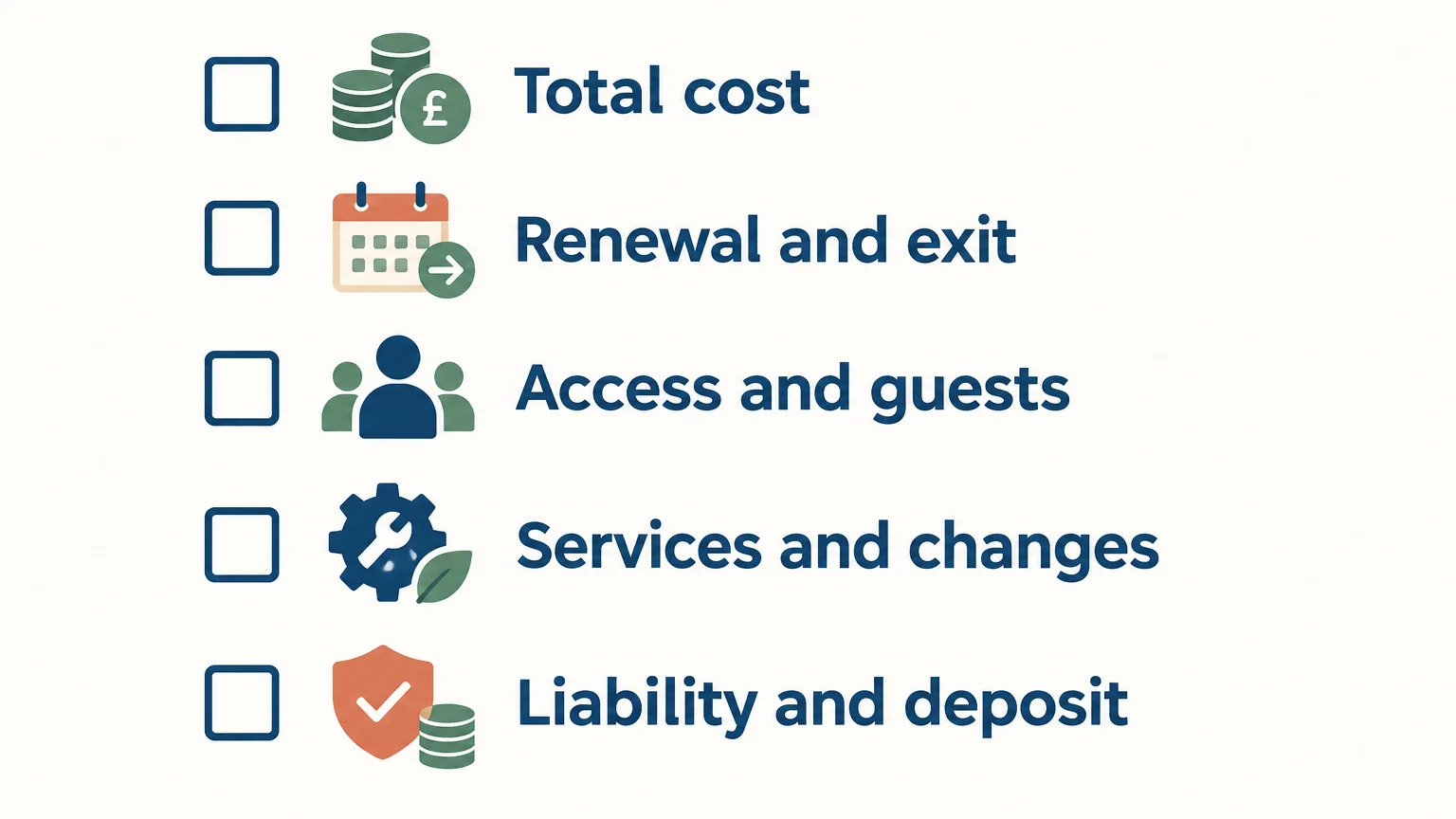
Before committing, compare the contract with the way you intend to work. Ask the operator to clarify any term you cannot explain in plain language, then request written confirmation of agreed changes.
- Total cost: What is included, what costs extra, and when is payment due?
- Term and exit: When does the agreement renew, and how do you give notice?
- Access: Which spaces, hours, locations, guests and bookings are allowed?
- Service: What happens if a promised facility changes or is unavailable?
- Risk: Who covers damage, lost belongings, insurance and deposit deductions?
If you need a workspace only occasionally, check whether an ongoing membership is necessary. Our membership versus a day pass article can help you compare those access models. Confirm the price and inclusions for the specific option before booking.
Make the written terms work for you
For a team choosing space in Birmingham, clear coworking contract terms make it easier to understand the true cost, permitted access, service expectations and exit route. Read the whole agreement, compare it with what you were promised, and get unclear points confirmed in writing. If the legal or financial commitment remains uncertain, seek advice before signing.
Explore workspace options in Birmingham
Choosing a workspace involves more than liking the setting. The written terms should match how your team works, the facilities it needs and the commitment it can make. Compare shared workspace, a private office and occasional access against your routine before you decide.
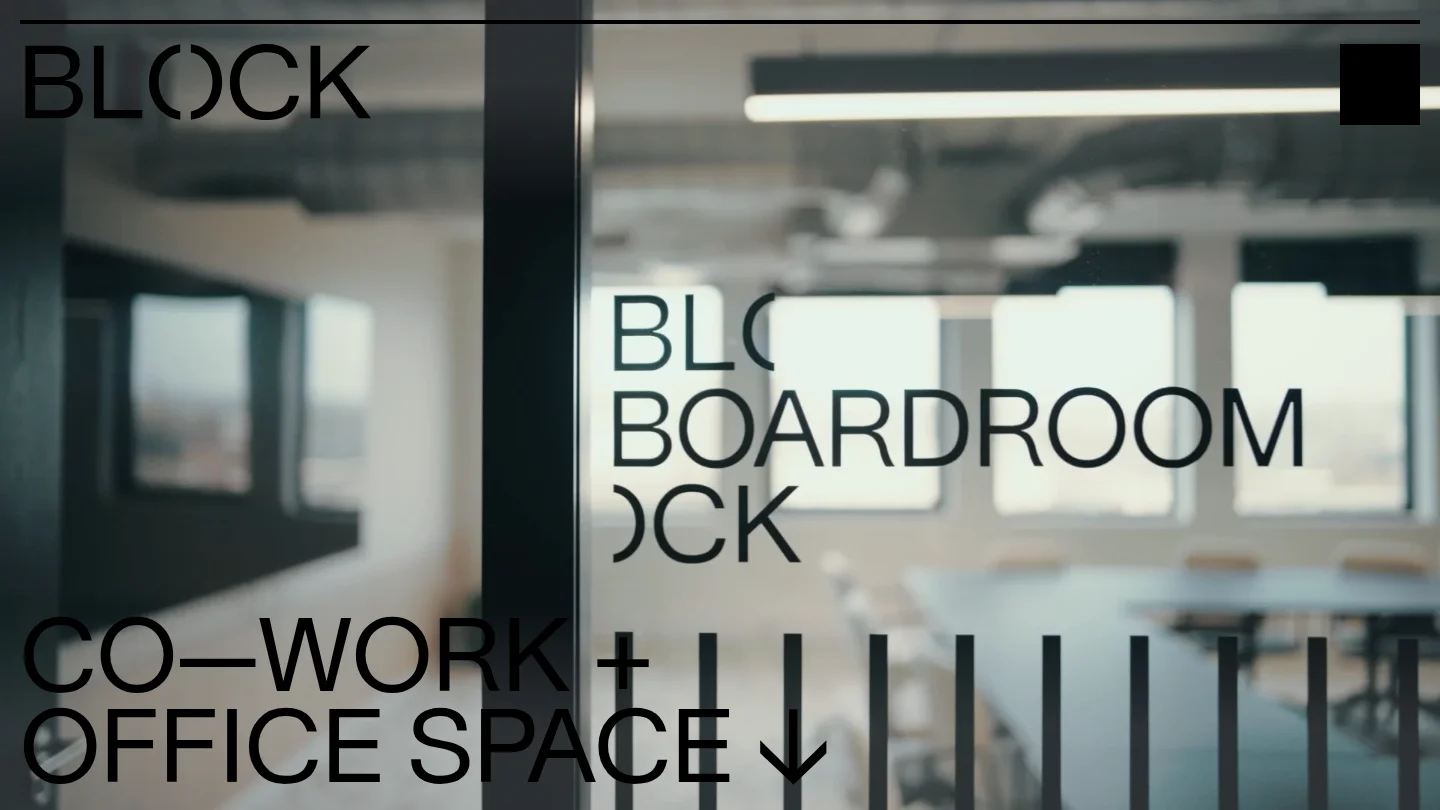
At BLOCK Workspace, our Birmingham location includes private offices, collaborative coworking areas and lounges, alongside flexible membership packages and Day Passes for temporary or occasional access. Our membership positioning emphasizes transparent options with no hidden costs or surprises. Ask us about the workspace formats available, then confirm the specific price, access and cancellation terms for your chosen option. Explore our flexible workspace options.
Frequently Asked Questions
Is a coworking membership the same as a commercial lease?
Not necessarily. The agreement may set out access to shared desks, a dedicated workspace or a private office, so check the rights and obligations it actually describes. If its legal status is unclear, seek advice from a solicitor.
What extra charges should I check before signing?
Ask whether meeting rooms, guest access, printing, storage or other facilities cost extra. Check the payment schedule, deposit terms and any charges that could apply if you cancel or breach the agreement.
Can a coworking contract renew automatically?
It may, depending on its terms. Check the renewal date, notice deadline, renewal period and cancellation method, and make a reminder well before the deadline.
What should I check about access and security?
Confirm your permitted hours, locations, guest rules and room booking rights. If you handle confidential information, ask how visitor access, entry credentials, shared networks and private work areas are managed.
What if I only need workspace occasionally?
Compare the total cost and access terms of an ongoing membership with a day pass. Our Day Passes provide temporary or occasional workspace access, so ask us for the specific price and inclusions before you book.