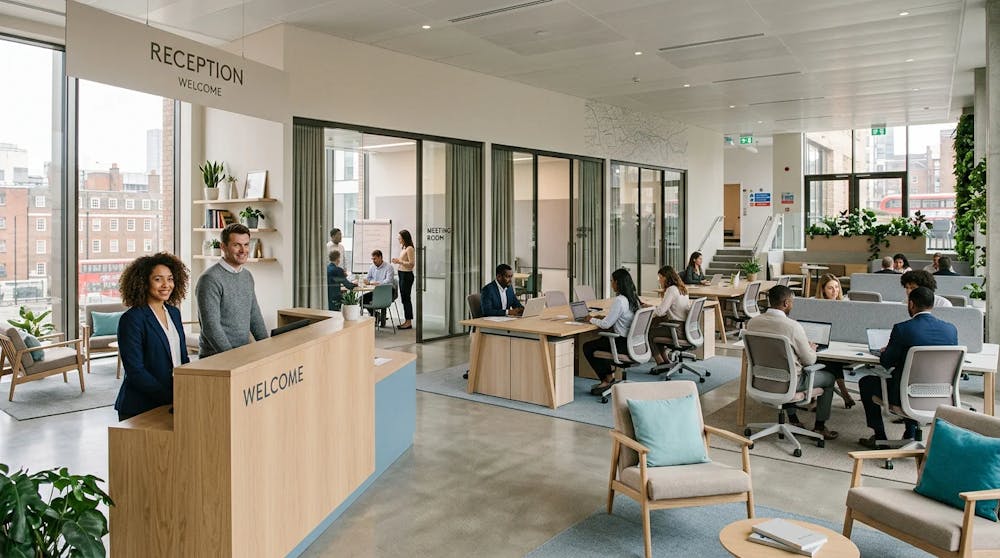
Fewer businesses are willing to sign a ten-year lease for a space they cannot resize. That shift explains why the UK flexible office market is valued at USD 4.19 billion in 2026 and why so many founders now begin their search with our serviced offices in Bristol rather than an empty commercial unit. The appeal is simple: predictable costs, no fit-out, and the freedom to grow or shrink.
Understanding exactly what a serviced office is helps you weigh it against a managed suite or a traditional lease. According to Mordor Intelligence, the sector is expanding at a 9.15% compound annual rate through 2031, driven by hybrid working and employer demand for variable-cost space. Below, you will find what these offices include, who they suit, and what they cost this year.
What a serviced office actually is
So, what is a serviced office in practical terms? It is an office or building that is fully equipped and managed by an external provider, who then rents individual rooms, desks, or entire floors to different companies. You do not install broadband, arrange cleaners, or set up separate utility contracts. Everything is in place, and you simply arrive and begin working.
These spaces are also described as flexible offices, business centres, or executive suites. Contracts typically run from a single month up to a year, with some providers offering rolling monthly agreements. That flexibility is the defining feature: space can be added at short notice if your headcount changes, without renegotiating a lengthy commercial lease.
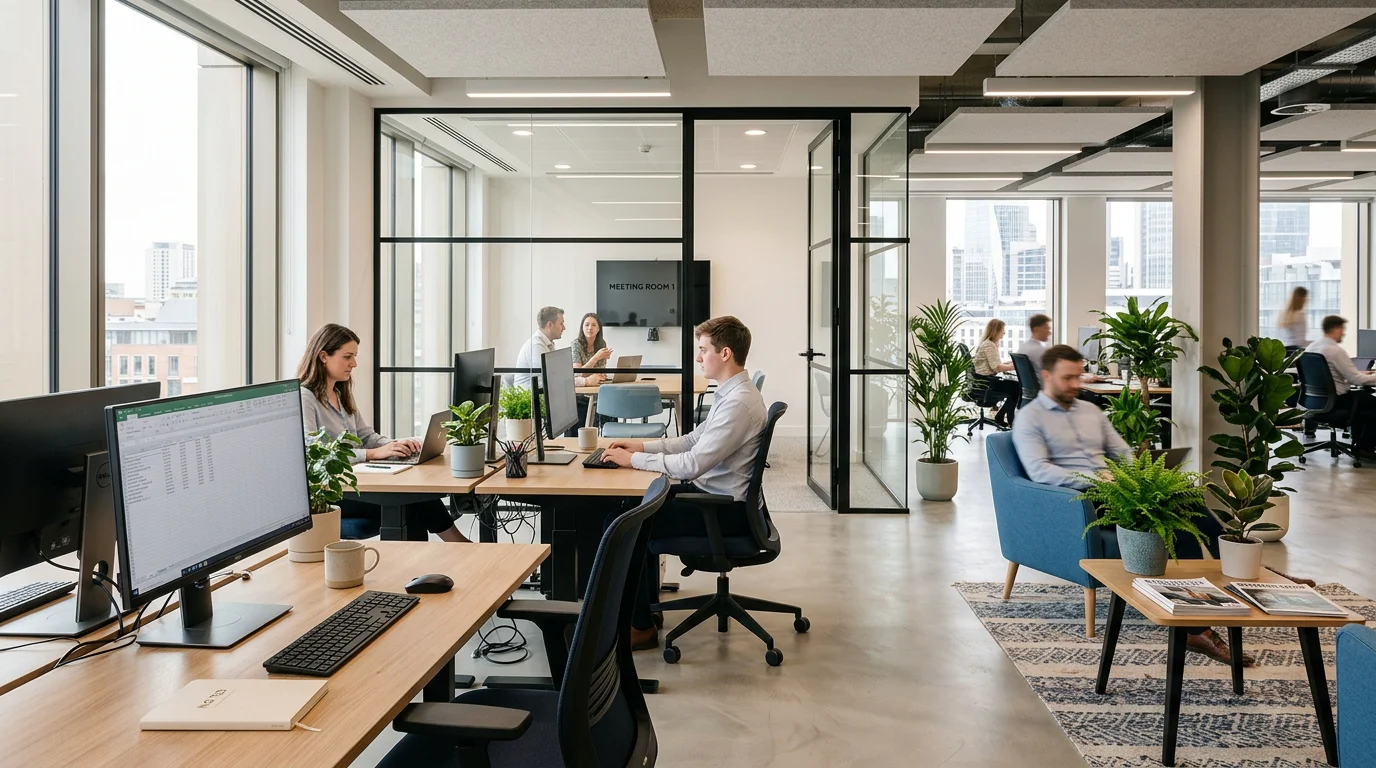
What is included in a serviced office
The headline benefit is that a single monthly fee covers almost everything. Rather than juggling separate bills for rent, energy, and connectivity, you receive one consolidated invoice. Most fully furnished workspaces in this category include:
- Furnished desks, chairs, and private office rooms ready from day one
- High-speed internet and IT infrastructure
- Utilities, cleaning, and building maintenance
- Staffed reception and mail handling
- Communal kitchens, breakout areas, and bookable meeting rooms
- Security, including CCTV and on-site management
Some services sit outside the core rate. Meeting rooms are often charged by the hour, and printing may require pre-paid credits. When you review options, transparency matters most, which is why we present our flexible workspace memberships with no hidden costs and no surprises around what is bundled and what is extra.
Serviced, managed, and leased offices compared
A serviced office is one of three common routes to a business base. A managed office is a similar all-inclusive model, but it is usually let as a whole space to one company, tailored to their layout and branding, on a longer commitment. A traditional leased office is rented directly from a landlord, giving total control but demanding fit-out, deposits, and legal fees.
| Feature | Serviced office (with Block Workspace) | Managed office | Leased office |
|---|---|---|---|
| Minimum commitment | From one month | One to three years | Typically five years |
| Move-in time | Immediate | Weeks (fit-out period) | Three to six months |
| Furniture and utilities | Included | Included | Not included |
| Customisation | Light branding, plus amenities | Full layout control | Total control |
| Community and perks | Networking, gyms, cafes, roof terraces | Limited | None built in |
The distinction is straightforward. Serviced offices prioritise speed, simplicity, and flexibility, while managed and leased options prioritise control at the cost of time and commitment.
Who uses serviced offices, and why
Historically, serviced space catered mainly to early-stage startups. Today the client base is far broader, spanning scale-ups, established SMEs, and corporates needing overflow or satellite teams. The common thread is a preference for variable costs over fixed liabilities. Around 10 to 15 percent of total office stock in key UK cities is now flexible space, well ahead of most continental European markets.
Typical users include growing teams that cannot risk paying for empty desks, businesses testing a new city without a long lease, and project-based teams needing space for a fixed period. For companies that value connection as much as convenience, the community element is decisive. Our members gain access to networking events, gyms, yoga studios, and roof terraces alongside our private offices in coworking hubs, blending focused work with wellbeing.

What a serviced office costs in 2026
Pricing depends on location, team size, and amenities, but 2026 benchmarks give a useful anchor. Analysis from Tally Workspace puts the national median at £498 per desk per month in the second quarter of 2026, though the figure hides a sharp regional divide. Regional cities remain 37 to 58 percent cheaper than London, with Bristol recently overtaking Manchester as the most expensive regional city at £411 per desk.
For lighter usage, a monthly coworking membership in the UK carries a median price of £180, according to CoworkingCafe data for early 2026. The value case rests on what that single fee replaces: furniture, IT setup, cleaning contracts, and reception staff. If your priority is flexibility for a growing team, our shared office space lets you scale membership up or down as needs change.
The UK serviced office market in 2026
The sector is mature and competitive. IBISWorld values the UK serviced offices industry at £3.0 billion in 2026, spread across roughly 2,445 businesses. Supply continues to expand, particularly in prime and Grade A buildings, as operators respond to strong occupancy across flexible centres.
One factor to watch is cost pressure on operators. Changes to UK business rates taking effect from April 2026 introduce a higher multiplier for large properties, a band that captures many multi-let office buildings and flexspace centres. This may influence pricing over time, reinforcing the value of transparent providers who commit to no unexpected charges.
Choosing the right serviced office for your business
Start with how your team actually works. If you need space ready within days, value predictable monthly costs, and want to avoid long-term obligations, a serviced office fits well. If you require a highly bespoke fit-out or a large permanent footprint, a managed or leased option may suit better.
Then weigh location, amenities, and room to grow. A central, well-connected base helps with client visits, recruitment, and team collaboration, while amenities such as cafes, gyms, and communal lounges make office days feel worthwhile. A tour, in person or virtual, is the fastest way to judge whether a space matches how you operate before you commit.
Conclusion
A serviced office gives you a fully equipped, professionally managed workspace on flexible terms, removing the delay, cost, and risk of a traditional lease. With the UK market worth £3.0 billion in 2026 and supply still growing, choice has rarely been wider, so the deciding factors become transparency, location, and community. Choose a provider whose pricing is clear and whose space genuinely supports both focus and connection. Our ultra-flexible memberships across Bristol, Plymouth, and Taunton pair stylish private offices and coworking with vibrant communities and perks, all without hidden costs. To see the difference for yourself, book a tour of our shared office space today.
Frequently Asked Questions
What is the difference between a serviced office and coworking?
A serviced office typically provides a private, lockable room for your team within a managed building, while coworking centres on shared, open workspaces designed for collaboration. Many providers, including us, offer both so you can combine private focus with communal amenities.
How long are serviced office contracts?
Terms are far shorter than traditional leases, often running from a single month up to a year. Some providers offer rolling monthly agreements, giving you the freedom to scale up or down as your headcount changes.
What is included in the monthly fee?
The fee usually covers furniture, high-speed internet, utilities, cleaning, maintenance, reception, and access to communal areas. Extras such as hourly meeting room hire or printing credits may be charged separately, so always confirm what is bundled.